Rapid Virus Recovery — Chapter 14 — Effective Treatment and Resolution of Chronic Diseases — Practical Bio-Oxidative Therapies

Chapter 14 — Effective Treatment and Resolution of Chronic Diseases — Practical Bio-Oxidative Therapies

Rapid Virus Recovery — Thomas E. Levy, MD, JD

Part 1 of 7; physical source pages 226–231.

Book introduction and complete contents · Previous section · Next section · Next part

Editorial notice — separate from the source: This is a faithful reproduction of the author’s published source, not an I-OM clinical guideline or endorsement of every claim. It is educational material, not individualized medical advice. The source’s original disclaimers and copyright notices are retained. Safety note: Do not use this reproduction as instructions for self-treatment. Hydrogen peroxide mist can irritate the respiratory tract; higher exposures can cause serious lung injury. See CDC/ATSDR safety guidance.

Unchanged original PDF


Source page 226

Open original page 226 — full-size image
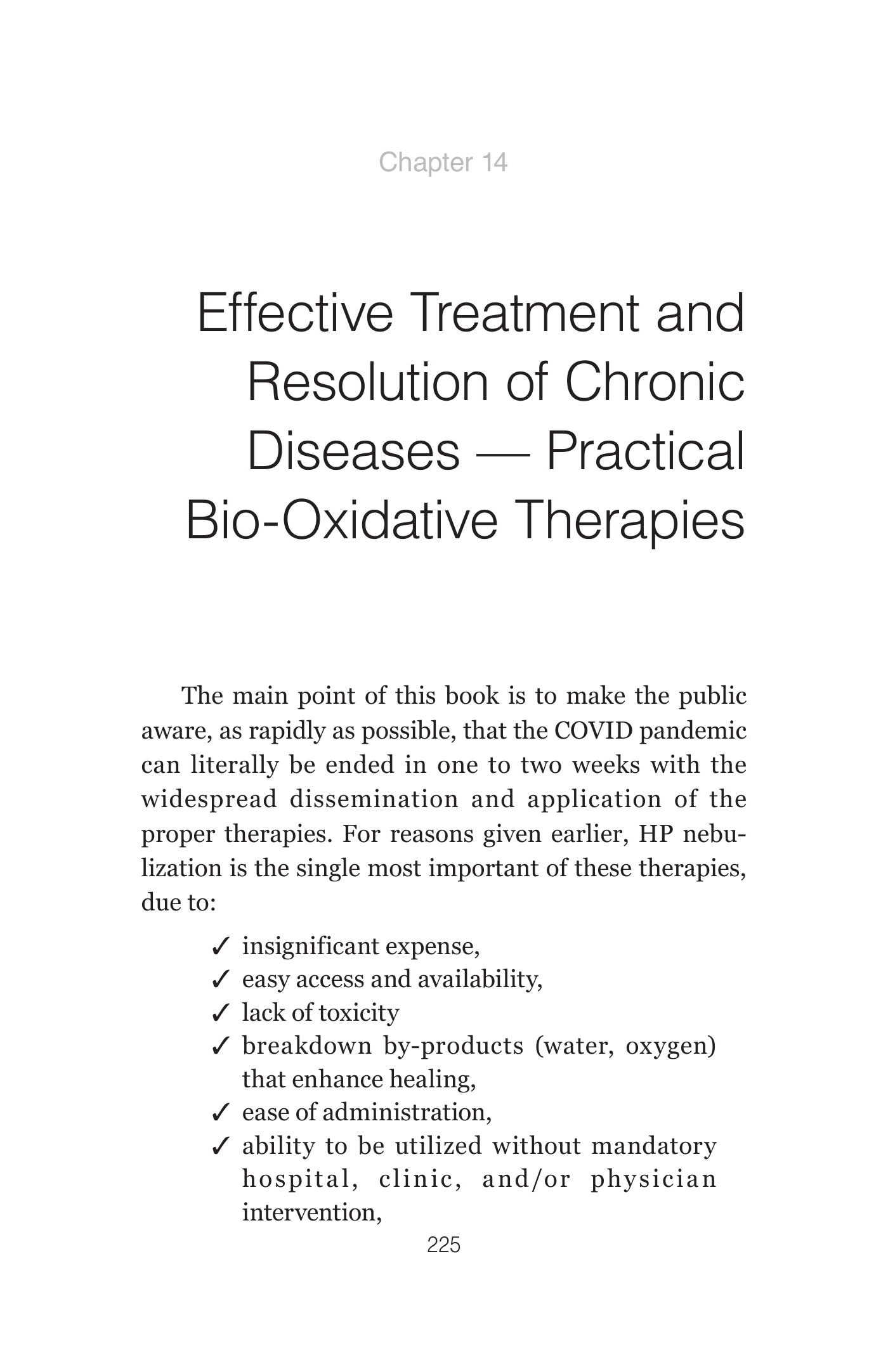
Chapter 14

Effective Treatment and Resolution of Chronic Diseases — Practical Bio-Oxidative Therapies

The main point of this book is to make the public aware, as rapidly as possible, that the COVID pandemic can literally be ended in one to two weeks with the widespread dissemination and application of the proper therapies. For reasons given earlier, HP nebu- lization is the single most important of these therapies, due to: ✓ insignificant expense, ✓ easy access and availability, ✓ lack of toxicity ✓ breakdown by-products (water, oxygen) that enhance healing, ✓ ease of administration, ✓ ability to be utilized without mandatory ho s pi t a l , c l i n i c , a nd /or ph y s i c i a n intervention, 225

Source page 227

Open original page 227 — full-size image
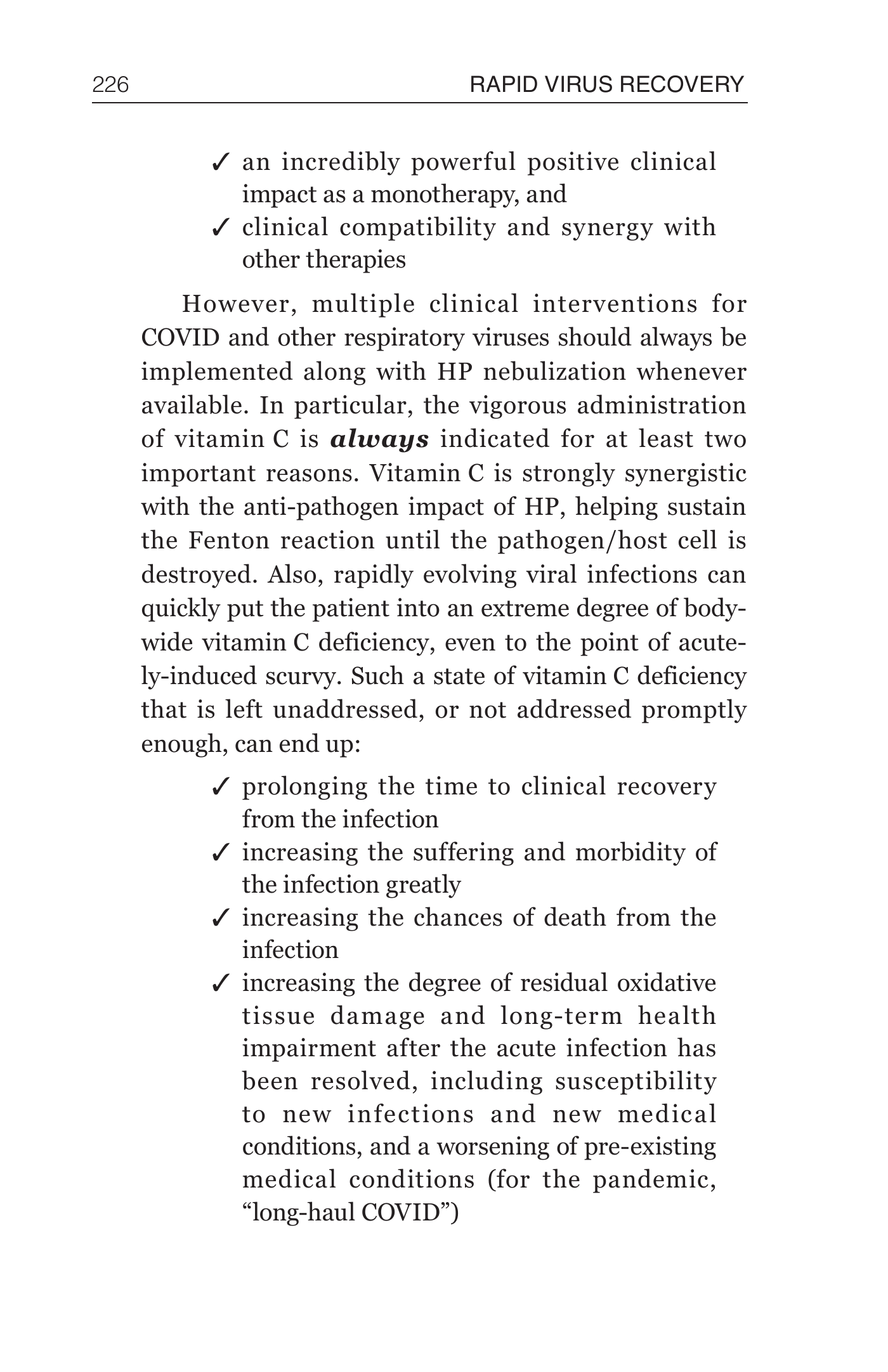
226 RAPID VIRUS RECOVERY

✓ an incredibly powerful positive clinical impact as a monotherapy, and ✓ clinical compatibility and synergy with other therapies However, multiple clinical interventions for COVID and other respiratory viruses should always be implemented along with HP nebulization whenever available. In particular, the vigorous administration of vitamin C is always indicated for at least two important reasons. Vitamin C is strongly synergistic with the anti-pathogen impact of HP, helping sustain the Fenton reaction until the pathogen/host cell is destroyed. Also, rapidly evolving viral infections can quickly put the patient into an extreme degree of body- wide vitamin C deficiency, even to the point of acute- ly-induced scurvy. Such a state of vitamin C deficiency that is left unaddressed, or not addressed promptly enough, can end up: ✓ prolonging the time to clinical recovery from the infection ✓ increasing the suffering and morbidity of the infection greatly ✓ increasing the chances of death from the infection ✓ increasing the degree of residual oxidative tissue damage and long-term health impairment after the acute infection has been resolved, including susceptibility to new infections and new medica l conditions, and a worsening of pre-existing medical conditions (for the pandemic, “long-haul COVID”)

Source page 228

Open original page 228 — full-size image

Effective Treatment and Resolution of Chronic Diseases 227

Collectively, the most effective therapies against any infection, but especially against viral infections, are the bio-oxidative therapies. Discussed earlier, these

Also, rapidly evolving viral infections can quickly put the patient into an extreme degree of body-wide vitamin C deficiency, even to the point of acutely-induced scurvy.

therapies include HP, vitamin C, ozone, ultraviolet blood irradiation, and hyperbaric oxygen treatment. There are also a significant number of different ways in which these therapies can be administered for optimal clinical impact, especially with HP, vitamin C, and ozone. However, until a patient is clearly responding and resolving their viral infection, there should also be no hesitancy to utilize effective anti-COVID prescrip- tion agents, such as hydroxychloroquine, chloro- quine, and ivermectin. One positive consequence of the pandemic is that it has brought to light for many people the fact that respiratory viruses can be readily prevented or cured, even if those remedies continue to be disparaged and ignored, or even suppressed. The primary and secondary impact of chronic pathogen colonization (CPC), in tandem with chronic focal infections in the oral cavity and aero digestive tract, can cause and exacerbate many of the chronic diseases that are considered incurable and even unre- sponsive to traditional therapies. Recent studies support the position that HP nebulization as well as

Source page 229

Open original page 229 — full-size image

228 RAPID VIRUS RECOVERY

other clinical treatments can quickly and completely end the pandemic. 1 Although that is the primary message of this book, many of these treatments can also lessen and even eliminate some chronic diseases due to CPC and focal infections. HP nebulization is the most important of all the therapies required to eliminate CPC and to lessen CPC impact on the gut’s microbiome and the body- wide seeding of pathogens and toxins via a leaky gut. That means that while HP nebulization is resolving a cold, flu, or COVID, it is simultaneously providing the conditions that will allow the gut flora as well as gut function to return to normal, leading to the healing of a leaky gut. As the leaky gut is resolved, easy dissemi- nation of pathogens and toxins to the rest of the body is prevented which results in an improvement, and some- times the disappearance of the chronic diseases these pathogens and toxins cause and worsen.

General Approach for the Improvement of Chronic Disease The premises of this book center on the fact that every chronic disease results from the existence of a unique array of oxidized biomolecules in the affected tissues or organs. No excess oxidation, no disease. As all toxins exert their toxicity through oxidation, and nearly all clinically significant toxin sources origi- nate from sites of pathogen growth, it follows that any protocol for the effective reversal or control of chronic diseases must involve two basic treatment approaches: 1. New toxin exposure and new biomolecule oxidation must be stopped or curtailed.

Source page 230

Open original page 230 — full-size image

Effective Treatment and Resolution of Chronic Diseases 229

2. Oxidized biomolecules must be reduced and returned to normal physiological function as completely as possible with increased antioxi- dant presence.

Stopping the production of new toxins In order to substantially slow or stop the produc- tion of new toxins, focal sites of concentrated infec- tion (infected gums, teeth, tongue, and tonsils) must be addressed, and larger areas of less concentrated chronic pathogen colonization (CPC) must also be resolved or minimized. The CPC in the oral cavity, throat, and upper respiratory tract is most readily addressed. Depending on the degree of positive clinical response, consideration should also be given to a more extensive treatment protocol that can help eradicate or reduce the pathogen burden now known to have been seeded from these infections in many of the affected tissues of different diseases. Not everybody will want to or be able to follow all of these recommendations for stopping new toxin exposure. Nevertheless, just following some of the suggestions will be vastly better for general health than ignoring them all out of the frustration that doing everything seems impossible. Many people will feel noticeably better in general with regard to the frequency and degree of bothersome symptoms associated with different medical condi- tions. Also, the monitoring of serial blood testing can be relied upon to see if less pathogens and toxins are being released into the body. In particular, a decline or normalization of a pre-existing and chronically elevated C-reactive protein level is an excellent indi-

Source page 231

Open original page 231 — full-size image
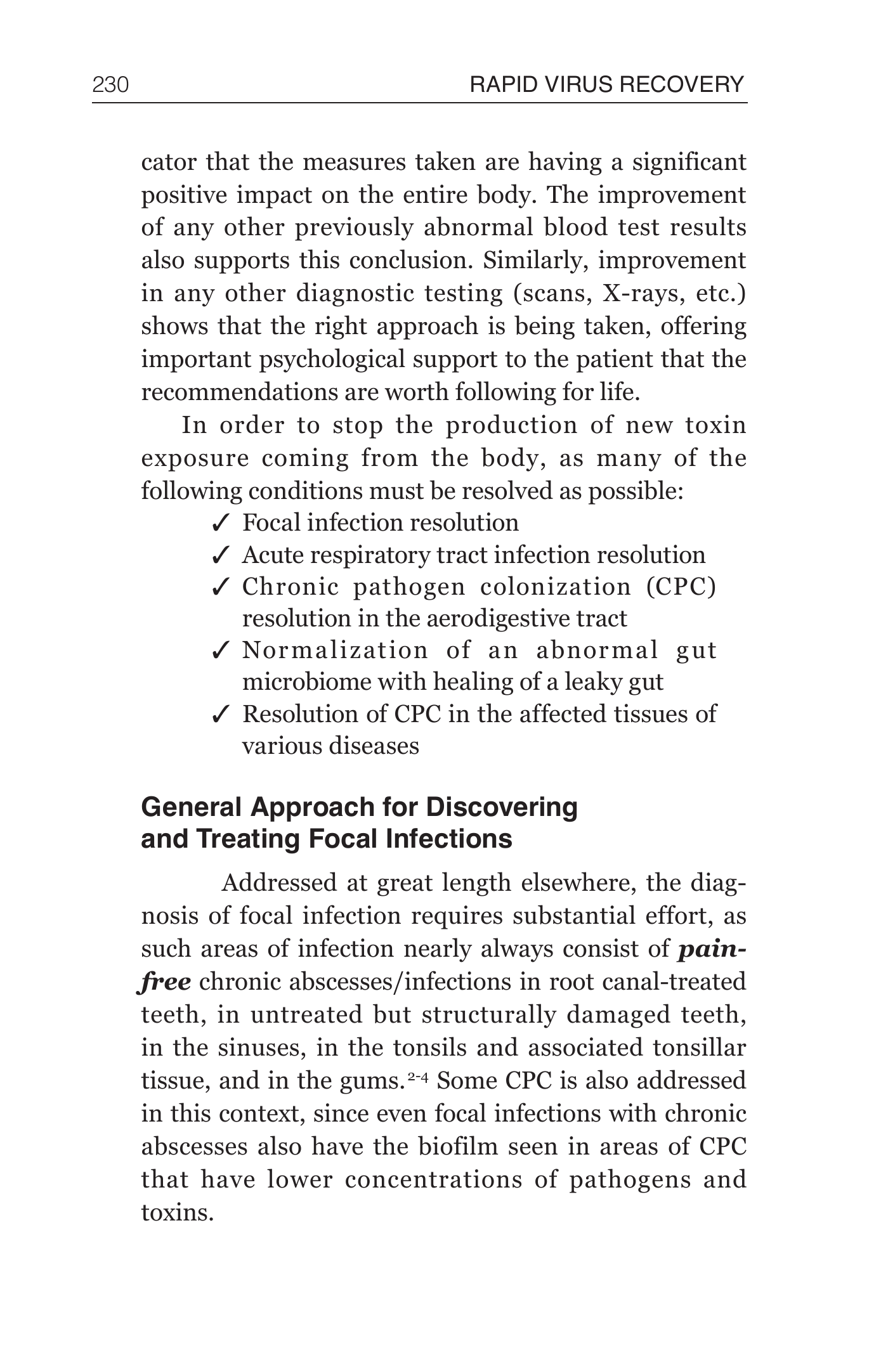
230 RAPID VIRUS RECOVERY

cator that the measures taken are having a significant positive impact on the entire body. The improvement of any other previously abnormal blood test results also supports this conclusion. Similarly, improvement in any other diagnostic testing (scans, X-rays, etc.) shows that the right approach is being taken, offering important psychological support to the patient that the recommendations are worth following for life. In order to stop the production of new toxin exposure coming from the body, as many of the following conditions must be resolved as possible: ✓ Focal infection resolution ✓ Acute respiratory tract infection resolution ✓ Chronic pathogen colonization (CPC) resolution in the aerodigestive tract ✓ Nor ma l i zat ion of a n abnor ma l g ut microbiome with healing of a leaky gut ✓ Resolution of CPC in the affected tissues of various diseases

General Approach for Discovering and Treating Focal Infections Addressed at great length elsewhere, the diag- nosis of focal infection requires substantial effort, as such areas of infection nearly always consist of pain- free chronic abscesses/infections in root canal-treated teeth, in untreated but structurally damaged teeth, in the sinuses, in the tonsils and associated tonsillar tissue, and in the gums. 2-4 Some CPC is also addressed in this context, since even focal infections with chronic abscesses also have the biofilm seen in areas of CPC that have lower concentrations of pathogens and toxins.


Book introduction and complete contents · Previous section · Next section · Next part

Chapter 14 — Effective Treatment and Resolution of Chronic Diseases — Practical Bio-Oxidative Therapies

Rapid Virus Recovery — Thomas E. Levy, MD, JD

Part 2 of 7; physical source pages 232–237.

Book introduction and complete contents · Previous section · Next section · Previous part · Next part

Unchanged original PDF


Source page 232

Open original page 232 — full-size image

Effective Treatment and Resolution of Chronic Diseases 231

Gums: The entirety of the tissue surrounding and supporting the teeth is the periodontium, and when it is chronically inflamed and infected, oral patho- gens and their associated toxins readily disseminate

Antibodies to many of the common periodontal pathogens have been detected in blood of patients with many of these medical conditions as well.

throughout the body. Technically the gums are the most superficial aspect of the periodontium, but they always appear clearly diseased when the underlying periodontal tissue is infected as well. Known as peri- odontitis when infected, the extensive documentation establishing the connection of this condition with a large number of different medical conditions is found in Chapter 6. Antibodies to many of the common peri- odontal pathogens have been detected in blood of patients with many of these medical conditions as well, and a number of these same pathogens have also been detected in the affected tissues of chronic diseases (see Chapter 4). While it is perfectly fine for someone to seek profes- sional periodontal care, it should only occur after taking some simple, highly effective measures to treat the gums/periodontal tissue first. These measures can often resolve periodontal disease completely, even when already advanced in degree. Regular irrigation of

Source page 233

Open original page 233 — full-size image

232 RAPID VIRUS RECOVERY

the gums under pressure, as with a Waterpik® machine, is very effective in not only flushing out the impacted and residual food particles from recent meals, but also in cleaning out areas of infection that go deeper below the gum line. Three percent (3%) HP, 15 to 30 ml added to 100 to 200 ml of water in the holding tank, is an excellent solution to use for regular irrigation of the gums. The warmer the solution, the better. A splash of a favorite mouthwash for improving the taste of the solution is perfectly acceptable as well. Early on, significantly diseased gums will readily bleed at even the lowest of pressure settings. This is to be expected, and most indi- viduals who irrigate at least a couple of times a day will quickly tolerate higher pressure settings. For many people, the gums recover so quickly that maximal pres- sures can be readily tolerated without bleeding after only a few weeks of irrigation sessions. However, as long as bleeding is easily induced, there should be no urgency to go to higher pressures until the gums clearly start to heal. Of note, regular flossing is NOT being recom- mended. Not only do many people damage their gums in a recurrent manner by utilizing a poor flossing technique, water irrigation routinely flushes out all impacted food particles much more thoroughly than can be eliminated with flossing. Just as with the body in general, it is much more natural and effective to “wash” soiled areas rather than pick at them in a mechanical fashion, as can be analogized with irriga- tion versus flossing. For the skeptic: irrigate and then floss. On another occasion: floss and then irrigate. It will quickly be realized that flossing does not remove

Source page 234

Open original page 234 — full-size image

Effective Treatment and Resolution of Chronic Diseases 233

hidden debris that has not already been removed by irrigation, whereas irrigation leaves behind nothing for the flossing to remove. Of note: smokers ALWAYS have chronically diseased gums and variable degrees of periodontitis. The protocols being discussed will help the gums of the smoker, but they will never resolve the underlying infection completely as long as smoking continues to any degree. But certainly, having three cigarettes daily will have a far less negative gum impact than three packs a day. Remember that the reason smoking has a strong relationship to heart disease is that it ALWAYS causes and sustains the periodontitis that continually seeds the coronary artery linings with oral pathogens and their associated antioxidant-consuming toxins.

Chronically Abscessed Teeth: 3D cone beam imaging, also commonly known as 3D X-ray, readily diagnoses virtually all abscesses present at the root tips of the teeth when it is properly performed and interpreted. Such abscesses are extremely harmful to general health, and the increased body-wide inflammation resulting from their presence precipitates many diseases and worsens all diseases. In particular, they result in a great deal of heart disease and cancer, especially breast cancer. But all diseases are negatively impacted. It is just that their role in causing heart disease and breast cancer should be espe- cially appreciated, as these two conditions account for over half of the deaths on the planet annually. 4 In order to optimize the chances of having good long-term health or at least minimally problematic medical conditions, all infected teeth must be extracted

Source page 235

Open original page 235 — full-size image

234 RAPID VIRUS RECOVERY

by an experienced biological dentist. This includes root canal-treated teeth, which all always infected with necrotic (dead) pulps. Specific expertise is required to see that the remaining infected tissue in and around the tooth sockets are properly cleaned

Two to five grams of liposome- encapsulated vitamin C, taken daily for several days before, the day of, and several days after the extraction of the infected tooth is a good approach.

of residual infection, along with the removal of any portions of the periodontal ligament remaining in place after the teeth are removed. The presence of residual tissue infection and periodontal ligament remnants pretty much assures the sockets will remaining chron- ically infected, making incomplete healing and cavita- tion formation very likely. Optimal biological dentistry also utilizes platelet-rich plasma and multiple applica- tions of ozone to optimize rapid healing and minimize any chances of long-term chronic infection. While not commonly available even among biological dentists, the administration of intra- venous vitamin C further assures an optimal long- term post-extraction outcome. However, taking oral vitamin C, especially in a quality liposome-encap- sulated form, is also very effective in achieving the optimal post-surgical healing of the extraction site. Two to five grams of liposome-encapsulated vitamin C, taken daily for several days before, the day of, and

Source page 236

Open original page 236 — full-size image

Effective Treatment and Resolution of Chronic Diseases 235

several days after the extraction of the infected tooth is a good approach. More vitamin C can be taken for a longer period of time if desired, as vitamin C is very difficult to overdo in the context of supporting good general health. Some degree of daily vitamin C supple- mentation should be done for life.

Tongue: Tongue cleaning is simple but important. Discussed earlier, the surface of the tongue is a major site of CPC in very many people, sometimes to the point of development of tongue-related medical conditions, such as geographic tongue and various manifesta- tions of tongue inflammation and infection. Tongue cleaning, therefore, is serving the health of the tongue as well as the rest of the body. And while cleaning the tongue occasionally is better than no cleaning at all, the optimal benefits of this procedure are only realized with at least daily cleaning/scraping. A quick scraping before each tooth brushing is optimal, but if it is to be performed once daily, it is best to do it directly before going to bed at night. While it is always of benefit to brush the surface of the tongue as part of a tooth brushing routine, it should not displace a concerted scraping of the tongue with a tongue scraper. While either order is accept- able, it is probably optimal to complete the scraping of the tongue first (taking 10 to 15 seconds) and then proceeding with tooth brushing followed by a quick tongue brushing (another 10 to 15 seconds). Any of a number of antiseptic mouth rinsing/gargling agents can then complete this session of oral cavity hygiene (which can also include HP or agents with HP). Much

Source page 237

Open original page 237 — full-size image

236 RAPID VIRUS RECOVERY

of what goes on with CPC in the tongue feeds chronic periodontal disease. Addressing this hygiene in this manner can provide for a much more complete resolu- tion of periodontitis as well, since fewer pathogens in the mouth lessen the chances of re-infection or support of ongoing infection in the gum tissue.

Tonsils: As discussed in Chapter 12, the tonsils are almost always chronically infected with multiple internal pockets of pus after being in an oral cavity containing chronically infected teeth and gums for a long enough period of time. Furthermore, the fact that such infected tonsils rarely have an abnormal exterior appearance upon oral examination makes their contribution to chronic diseases especially insidious and still largely unappreciated. Such tonsillar infection is a factor that very frequently is playing a leading role in all chronic disease, but especially in heart disease. Also, the “diabolical” nature of this hidden infection is that these seemingly-normal tonsils appear virtually incapable of healing themselves once chronically abscessed, even after appropriate extractions of infected teeth and healing of infected gums have taken place. Throughout the history of medicine, the only approach to chronically infected tonsils was surgical removal. This occurred especially in the context of young children and even early teens who maintained large, grossly infected tonsils that only resolved mini- mally between bouts of acute tonsillitis. Oftentimes the indication was to help breathing since sufficient tonsillar enlargement would impair ease of respiration.


Book introduction and complete contents · Previous section · Next section · Previous part · Next part

Chapter 14 — Effective Treatment and Resolution of Chronic Diseases — Practical Bio-Oxidative Therapies

Rapid Virus Recovery — Thomas E. Levy, MD, JD

Part 3 of 7; physical source pages 238–243.

Book introduction and complete contents · Previous section · Next section · Previous part · Next part

Unchanged original PDF


Source page 238

Open original page 238 — full-size image

Effective Treatment and Resolution of Chronic Diseases 237

The injection of ozone gas directly into the tonsils is a very effective way of healing or at least debulking the infection load in both acutely infected tonsils as well as in the normal-appearing but chronically

...the “diabolical” nature of this hidden infection is that these seemingly- normal tonsils appear virtually incapable of healing themselves once chronically abscessed...

infected tonsils just described. It is a simple procedure and takes only a few minutes per tonsil in an ozone- equipped biological dentist office. An unpublished clinical study in Cuba conducted over an 8-year period enrolled 2,300 patients with a diagnosis of tonsillitis. Injections containing 5 cc of ozone at a concentration of 50 gamma were given in these tonsils. This was repeated for a total of 4 injection sessions. A number of different antioxidant and pro-ox- idant markers were measured in all patients, and all of these markers dramatically normalized. No clinical relapses or recurrent tonsillar infections were seen over a follow-up period of a year. The author concluded that outstanding results were seen in 97% of the patients. Such a therapy can virtually eliminate the surgical indi- cations for tonsillectomy. Anecdotally, a 69-year male came down with an acute tonsillitis, with massive swelling of both tonsils and the classical external appearance of foci of pus over the surface of the tonsils. One of the tonsils enlarged to

Source page 239

Open original page 239 — full-size image

238 RAPID VIRUS RECOVERY

the point of partially obstructing the throat and inhib- iting the normal ability to breathe easily. A biological dentist injected multiple sites in the tonsils with a 50 gamma concentration of ozone. The clinical impact was so dramatic that the patient noted increased ease of respiration by the time he left the dental office. Several more injection sessions over the next few weeks facil- itated a complete healing of the tonsils, with a normal size and appearance, along with a return to a normal CRP blood test from a high level recorded before the tonsillar injections. The International Scientific Committee of Ozone Therapy has published a recommended protocol for the injection of infected tonsils with ozone gas (https:// isco3.org/). This protocol should be primarily regarded as a general guide, as dentists experienced in the use and injection of ozone can vary the ozone dose and other aspects of this protocol. The local treatment consists of the following: 1. Use a needle of 30 gauge 1 and ½ inches in length 2. Ozone concentrations between 10 to 20 gamma with a volume of 2.5 ml per injection point 3. Inject at the anterior and rear pillars of both tonsils Depending on the preferences of the dentist and the clinical/tissue response seen, more injections can be given in each tonsil, especially if substantial enlarge- ment is present. Concentrations of ozone can be up to about 50 gamma, as was noted to have been done in the large Cuba study just described above.

Source page 240

Open original page 240 — full-size image

Effective Treatment and Resolution of Chronic Diseases 239

For the normal-appearing yet chronically infected tonsils, consideration should be given to weekly injec- tions for about a month. While not always present, the lowering of an elevated CRP level is a strong indicator

The clinical impact was so dramatic that the patient noted increased ease of respiration by the time he left the dental office.

that chronic infection in the tonsils is being alleviated or resolved. If there is suspicion of residual infection or a CRP test does not normalize completely, consider- ation can be given to slightly larger volume injections with higher ozone concentrations, while injecting in different areas of the tonsils at each treatment session. As noted directly above with “regular” tonsillitis, intra- tonsillar ozone injections, especially when periodi- cally repeated, can be expected to resolve many such chronic tonsillar infections. Furthermore, the resolu- tion of such advanced infection and abscesses can also be expected to return to a normal status much of the protective immune function provided by the tonsils. These injection protocols can be utilized while infected teeth and gums are still present in the mouth, with the intention of some positive health benefit still accruing. However, an infection-free tonsil in the long- term should never be assumed until there has been administered a series of ozone injections after all oral infections have been removed or effectively treated

Source page 241

Open original page 241 — full-size image

240 RAPID VIRUS RECOVERY

(as with the gums), and the CRP remains in the lower range of normal. When CRP levels remain high or a clinical response is felt to be suboptimal after tonsillar ozone injections, consideration can be given to a similar series of injec- tions to as much of the tonsillar tissue in Waldeyer’s ring as can be reached, including the lingual tonsil, the palatine tonsils (or the healed tissue where they had been surgically removed), the tubal tonsils, and the adenoids. At the time of the writing of this book, there are only a few practitioners who have given this exten- sive an ozone treatment of all the tonsillar tissue, but that number is continuing to grow. Experienced ozone practitioners are not generally reluctant to inject new tissue areas as long as there is evidence or suspicion of chronic infection there. And other than the discomfort of the injection, ozone does no harm to normal tissue if no infection is actually present.

General Approach for Treating Chronic Pathogen Colonization Elimination of the pathogens present in focal infec- tions and aerodigestive sites of CPC is a giant step toward the resolution of CPC residing in other chronic disease-associated tissues throughout the body. As discussed previously, the majority of CPC in the body exists in the aerodigestive tract (sinuses, nose, mouth, throat, airways, and esophagus). It is these oral focal infections and areas of aerodigestive CPC that perpetu- ally “seed” CPC in the other areas of the body, primarily through a leaky gut. Therefore, it is essential to address these infections and the sites of aerodigestive CPC in order to eliminate this continual flow of pathogens and

Source page 242

Open original page 242 — full-size image

Effective Treatment and Resolution of Chronic Diseases 241

toxins to other tissues of the body as a primary step toward resolving the CPC in those tissues. As these secondary CPC sites start to resolve, those individuals with mild presentations of a chronic disease could see

As these secondary CPC sites start to resolve, those individuals with mild presentations of a chronic disease could see a complete resolution of their medical conditions.

a complete resolution of their medical conditions. Of course, the input of an integrative physician and/or a biological dentist is required to prescribe and execute an optimal treatment protocol and long-term health maintenance plan. Probably the primary way that CPC is initiated in the aerodigestive tract is from residual pathogen colo- nization following the clinical resolution of an acute cold or bout of flu. Residual colonizations from colds and flus almost always occur as a rule. Areas of CPC do not resolve themselves so they should be assumed to be present in all or part of the aerodigestive tract after a cold or flu has clinically resolved, no matter how much time has elapsed since the initial infection. For that reason, pre-emptive steps for preventing a cold or flu from taking hold or for prompt treatment after any characteristic symptoms occur is always indicated to minimize the chances of sites of CPC getting started. Any of the focal infections discussed can also seed and start areas of CPC in the aerodigestive tract.

Source page 243

Open original page 243 — full-size image

242 RAPID VIRUS RECOVERY

Anti-pathogen nebulization for pre-existing CPC is the most important part of any chronic disease resolution protocol, in addition to being essential for the prevention and/or resolution of any acute respiratory infection.

The single best monotherapy for a cold, flu, or COVID infection is HP nebulization. As an added benefit, individuals who use it are simultaneously breaking up pre-existing CPC in the aerodigestive tract. Those individuals treating acute respiratory infec- tions with properly-administered HP nebulization often experience a sudden surge of well-being — and even a sense of what optimal health feels like — as the biofilm-protected pathogens that have been present for years are eradicated along with the new pathogens responsible for their acute respiratory infections. Besides HP, several other non-toxic, anti-patho- genic agents can be nebulized. Some of these include: ✓ DMSO ✓ Vitamin C ✓ Magnesium chloride ✓ Zinc chloride ✓ Nascent iodine ✓ Sodium bicarbonate ✓ N-acetylcysteine ✓ Normal saline and hypertonic saline If an increase in the intracellular uptake of vitamin C and/or magnesium is desired, insulin and/or hydrocortisone may be added to the nebulized solution as well. Modern medicine has long focused on the oral or parenteral delivery of drugs with the hope that


Book introduction and complete contents · Previous section · Next section · Previous part · Next part

Chapter 14 — Effective Treatment and Resolution of Chronic Diseases — Practical Bio-Oxidative Therapies

Rapid Virus Recovery — Thomas E. Levy, MD, JD

Part 4 of 7; physical source pages 244–249.

Book introduction and complete contents · Previous section · Next section · Previous part · Next part

Unchanged original PDF


Source page 244

Open original page 244 — full-size image

Effective Treatment and Resolution of Chronic Diseases 243

sufficient doses will eventually arrive at the target tissues. Nebulization provides the ability to deliver higher concentrations of therapeutic agents and nutri- ents directly to diseased or infected lung tissues than

Those individuals treating acute respiratory infections with properly- administered HP nebulization often experience a sudden surge of well-being...

can often be achieved with traditional administration. In some situations, nebulization also allows the thera- peutic levels of inhaled agents to diffuse throughout the body while avoiding potentially toxic doses that might be required with other means of intake. Although HP is a powerful monotherapy for the treatment/resolution of acute respiratory infections or CPC in the aerodigestive tract, the agents listed above can also be added to HP depending on the therapeutic needs and objectives. While exceptionally nontoxic, overexposure to HP can nevertheless manifest pro-ox- idant effects such as nasal burning, irritation, runny nose, sneezing, a minimally sore throat, or a tendency for a non-productive cough. If an HP nebulization is overly aggressive and continues long enough beyond pathogen resolution, combinations of these other agents may also be nebulized separately as a means of helping to heal the tissue after pathogen elimination and/or to soothe any possible irritation. Lower concen- trations of HP in nebulization solutions will almost completely avoid such side effects, but a 3% concentra-

Source page 245

Open original page 245 — full-size image

244 RAPID VIRUS RECOVERY

tion will produce a much more rapid pathogen kill and lead to a quicker clinical recovery. Although it is never recommended that one nebulize with a HP concentration greater than 3%, a

Often, many acutely ill and heavily- infected individuals experience no side effects when nebulizing with a 3% HP concentration and report that it is extremely easy to inhale and even very calming.

weaker concentration is fine and may be created by diluting with water or saline. Saline is preferable as a rule, since sodium chloride has its own anti-pathogen impact, and the nebulization of water tends to provoke coughing. The greater strength solutions will work more quickly, but weaker solutions may be used to avoid the potential effects noted above. Often, many acutely ill and heavily-infected individuals experience no side effects when nebulizing with a 3% HP concen- tration and report that it is extremely easy to inhale and even very calming. The higher concentration is also able to improve blood oxygenation more quickly than lower ones. Although both the desktop jet nebulizer or a small handheld mesh nebulizer are effective, the handheld version is very quiet and delivers a finer, deeper-pene- trating mist. The finer mist is especially important for dealing with infections which are already established

Source page 246

Open original page 246 — full-size image

Effective Treatment and Resolution of Chronic Diseases 245

deep in the lungs. Chapter 11 has more information on the purchase and maintenance of a nebulizer. The following HP nebulization protocol is a simple, inexpensive approach for the prevention and treat- ment of all respiratory tract infections. When used less frequently, the same protocol serves as a reliable and easy way to normalize and maintain the microbial flora in the aerodigestive tract.

Hydrogen Peroxide Nebulization Protocol Regular OTC (over the counter) 3% HP can be utilized, especially for acute infections. If expense and availability present no difficulties, food-grade or other purer forms of HP can be used. However, there is no evidence of any harm in using the OTC HP for nebulization. Nor is there any scientific reason to believe that any potential harm will eventually be seen. Nevertheless, if someone plans on adopting inter- mittent HP nebulization as a procedure to be applied for life, HP of optimal purity is certainly a reason- able option. However, only having the availability of OTC HP should not deter anyone from its regular use. Arguably, normal respiration in many environments presents as much, or more, potential “toxicity” as nebu- lized OTC HP. As noted above, extremely dilute solutions of nebu- lized HP have been found to be very effective in dealing with respiratory pathogens. However, to optimize the speed and degree of effectiveness, 3% is still the best concentration to use if well-tolerated. But there should be no hesitation to use a lower, even much lower, concentration to find a HP nebulization that is not

Source page 247

Open original page 247 — full-size image

246 RAPID VIRUS RECOVERY

only tolerated, but pleasant and supportive of easy breathing. When a runny nose or slightly sore throat is already present, a good approach would be to nebulize as many as four times during the day for 10 to 15 minutes at a time. There is nothing wrong with doing the nebu- lization more often than this if desired. Generally, significant symptomatic relief will be realized by the completion of the second nebulization, although many report near-immediate improvement in symptoms and an improved sense of well-being after the first nebulization. As with all therapeutic anti-pathogen measures, it is always advisable to continue the nebulization to some degree for at least 24 to 48 hours beyond complete symptom resolution and a return to feeling normal in order to minimize the chances of clinical relapse and renewed infective symptoms. For both the prevention of acute respiratory illness as well as for maintenance of a normal aerodiges- tive tract flora upon elimination of CPC, nebulization can be done as often as desired. For some professions that involve close contact with many people, such as the dentist who is only a few feet away from multiple open mouths for many hours, a brief nebulization at the end of the workday is an excellent idea. This can be done for 2 to 3 minutes at a time — a session of a 10- to 15-minute duration would not be needed. For someone feeling well who experienced a positive impact on bowel and gut function after initial CPC eradication with HP nebulizations, a 2- to 5-minute HP nebulization once weekly would be a good maintenance approach. However, the normalcy

Source page 248

Open original page 248 — full-size image

Effective Treatment and Resolution of Chronic Diseases 247

of the microbiome can deteriorate much more rapidly than is commonly appreciated, and any loosening of bowel function after an earlier return to more formed bowel movements should signal the need for imme-

When a runny nose or slightly sore throat is already present, a good approach would be to nebulize as many as four times during the day for 10 to 15 minutes at a time.

diate daily HP nebulization until a return to normal bowel function is seen. Secondary measures and considerations that can be applied in the support of the recovering abnormal microbiome and associated leaky gut after the aerodi- gestive CPC has been largely eradicated include the following: ✓ All of the measures applying to focal infection discussed above can contribute to lessening the swallowing of pathogens a nd tox ins, a nd to minimi z ing t he recurrence of CPC in the aerodigestive tract, especially with good tongue and gum care. The maintenance of a healthy tongue and healthy gums is substantially more important to keeping a normal flora in the aerodigestive tract than by the elimination of infected teeth and tonsils. This is due to the route by which most of the involved pathogens and toxins are released into the

Source page 249

Open original page 249 — full-size image

248 RAPID VIRUS RECOVERY

body. The infected teeth and tonsils have much a greater direct negative impact on body-wide increased oxidative stress, as they release most of their pathogens and toxins directly into the draining blood and lymphatic circulations, and not into the throat to be swallowed into the lower digestive tract. ✓ Probiotics can be used early on when a program of HP nebulization is being initiated. While not necessary for most individuals once the measures above have been implemented, they can certainly help some individuals “kickstart” the recolonization of their microbiome with good gut bugs. And this is not to say that anyone who feels that probiotics are helping their gut function and digestion significantly should feel compelled to stop taking them. However, most people who only had minimal digestive/bowel problems prior to HP nebulization simply do not need the “support” of probiotics indef initely to restore and maintain a nor mal microbiome. Stopping the continual swallowing of pathogens from the CPC in the aerodigestive tract usually improves gut function very rapidly. ✓ Also discussed earlier, it is important to avoid dietary iron sources as much as possible, as is seen especially with foods that are labeled as being enriched or fortified. Extra ingested iron beyond what is needed to maintain normal hemoglobin


Book introduction and complete contents · Previous section · Next section · Previous part · Next part

Chapter 14 — Effective Treatment and Resolution of Chronic Diseases — Practical Bio-Oxidative Therapies

Rapid Virus Recovery — Thomas E. Levy, MD, JD

Part 5 of 7; physical source pages 250–255.

Book introduction and complete contents · Previous section · Next section · Previous part · Next part

Unchanged original PDF


Source page 250

Open original page 250 — full-size image

Effective Treatment and Resolution of Chronic Diseases 249

synthesis is never desirable. This includes supplemental or prescribed iron. This extra iron results in increased oxidative stress in the gut, directly promoting inflammation causing the barrier function of the intestinal cells to become degraded, resulting in a leaky gut. And even when the microbiome has not yet become overpopulated with pathogens, this leaky gut can permit the swallowed pathogens and toxins from unresolved CPC in the aerodigestive tract to be readily assimilated into the blood and lymphatic circulations and disseminate throughout the body. ✓ Regardless of any other factors that are involved in improving gut function, optimal function will never be realized if no attention is paid to the established principles of proper food combining. The wrong combinations always slow gut motility and bowel transit times, often profoundly. Food which should be retained in the stomach for 1 to 2 hours might stay there for 8 to 9 hours. This results in incomplete digestion and increased putrefaction of the food. The abnormal gut bugs, like many Clostridia species that are always present and waiting for a favorable sluggish bowel env ironment, quick ly proliferate and produce potent pathogen- related toxins directly in the gut. Of course, this just further sustains any abnormal gut microbiome and leaky gut that the

Source page 251

Open original page 251 — full-size image

250 RAPID VIRUS RECOVERY

CPC eradication protocol is attempting to correct.

CPC in Diseased Tissues: The chronic colonization of pathogens, usually seeded from oral origins, has been documented to be present in the affected tissues of a number of different chronic diseases (see Chapter 4). It is likely that such CPC would also be found in the diseased tissues of nearly all chronic medical conditions, since it is only the presence of significant sources of new oxidative stress that prevent damaged (oxidized) tissue from getting repaired and showing clinical improvement. In other words, a redox (reduction/oxidation) state in the affected tissues must chronically favor reduc- tion (repair) over oxidation (damage) in order for true healing to take place. And this almost never occurs when the CPC in a diseased tissue is permitted to continue to persist and chronically produce new patho- gen-related toxins to keep the focal redox balance in that tissue skewed toward oxidation. So far, however, only a relatively small number of diseases have been investigated specifically for the presence of such oral pathogens. However, the docu- mentation that a chronic dental infection such as periodontitis has a probable cause-and-effect rela- tionship to an enormous number of different diseases and conditions is a strong indicator that CPC will be found in a vast majority of the tissues affected by any chronic disease if sensitive enough testing is utilized. This is especially the case for any disease that shows little positive response to quality antioxidant therapy or any tendency toward actual disease reversal. However,

Source page 252

Open original page 252 — full-size image

Effective Treatment and Resolution of Chronic Diseases 251

when these areas of CPC can be eliminated or substan- tially minimized in their presence in the tissues, a great deal of pathology reversal can be anticipated, and some early chronic diseases can be expected to resolve completely. In order to resolve or minimize any CPC in dis- eased tissues throughout the body, several important interventions need to take place: ✓ Stop the seeding of new pathogens. This is achieved by the measures already discussed above, which include • eradicating oral cavity focal infections, • eradicating aerodigestive sites of CPC that permit pathogen access to the body through the leaky gut that the CPC helps to cause and sustain, • following the measures needed to heal the leaky gut and restore a normal gut microbiome, and • optimizing the levels of the most critical oxidative stress-modulating hormones in the body (estrogen, testosterone, thyroid). ✓ Eradicate the areas of CPC already in the tissues as directly as possible with the most potent anti-pathogen agents available ( bio - ox idat ive t herapies, usua lly in combination). ✓ Help infected and previously infected cells regain optimal health by the restoration of normal intracellular levels of magnesium, vitamin C, and glutathione.

Source page 253

Open original page 253 — full-size image

252 RAPID VIRUS RECOVERY

As can be readily appreciated at this point in addressing chronic infections in the body, there are always complex interrelationships among all the factors involving pathogens and their related toxins, along with their chronic dissemination and seeding throughout the body. The measures that will now be discussed have the potential to cause substantial healing and resolution of chronic disease by themselves. However, an optimal clinical response, and sometimes just any positive clinical response at all, must first involve the reso- lution of the factors continuing to freshly seed the CPC in the tissues of the body. In order to eradicate CPC in the tissues of the body outside of the aerodigestive tract, optimal therapeutic agents should have the collective ability to: ✓ Kill/inactivate and metabolically degrade any infectious agents, including bacteria, viruses, protozoa, and fungi [bio-oxidative therapies] ✓ Hydrate and oxygenate the previously infected tissues [bio-oxidative therapies]. ✓ Restore normal levels of antioxidants, vitamins, minerals, and other nutrients to the tissues (especially vitamin C and magnesium) [proper supplementation] ✓ R e s t o r e n o r m a l le v e l s o f t h y r oi d hor mone a nd t he appr opr i ate s e x hormone [management and prescription by a qualified integrative health care practitioner] Not surprisingly, it is a combination of bio-oxi- dative therapies (HP, vitamin C, ozone, ultraviolet

Source page 254

Open original page 254 — full-size image

Effective Treatment and Resolution of Chronic Diseases 253

blood irradiation, and hyperbaric oxygen therapy) that is needed to achieve the goal of CPC eradica- tion in the tissues. That is not to say that all five of them would always be required. Clinical oversight

However, a multi-pronged bio- oxidative approach is the best way to significantly improve chronic diseases in the most patients.

from an experienced integrative physician or other healthcare provider can help optimize the eradica- tion protocol. Clinical oversight will be needed for a program of optimal supplementation along with the treatment of hormone deficiencies and serial labora- tory test monitoring. Unlike the treatment and prevention of acute respi- ratory infections, the effective treatment of areas of CPC throughout the body must involve a licensed healthcare practitioner who understands the treat- ment protocol and wants to apply it as completely as possible. The number of such practitioners is small currently, but continuing to increase in number. Also, some such open-minded practitioners might only have the ability and resources to offer a part of the suggested protocol. For example, intravenous vitamin C might be available but not ozone blood treatment. For some individuals, just one arm of the protocol could suffice for CPC resolution. However, a multi-pronged bio-oxidative approach is the best way to significantly improve chronic diseases

Source page 255

Open original page 255 — full-size image

254 RAPID VIRUS RECOVERY

in the most patients. Furthermore, the patient should know that eradicating entrenched CPC throughout the body will not be achieved with the same level of success as the eradication of oral cavity focal infections and aerodigestive tract CPC. But that should not deter the clinician from giving each patient their best chance at their own optimal degree of health. Also, while many patients will have already experi- enced significant improvement of their general health with focal infection/aerodigestive CPC eradication, there are still not many patients who have had the entirety of the protocol(s) that are being recommended applied. Nevertheless, there is every reason to believe that aggressive anti-pathogen measures applied after the eradication of aerodigestive pathogens and oral focal infections will produce excellent clinical results. However, the normalization of the gut microbiome and the healing of any associated leaky gut needs to occur first in order to bring the health of the patient to a level never achieved with the mainstream medical therapies that simply ignore the presence of chronic pathogen production and ingestion. The primary bio-oxidative therapies for eliminating diseased tissue CPC are: ✓ Intravenous HP infusions. ✓ Intravenous vitamin C and magnesium chloride infusions (also oral liposome- enc apsulated for ms of v itamin C a nd m a g ne s iu m). T he m a g ne s iu m administration is not pr imar ily bio - ox id at ive by it s el f, but h ig h ly supportive of the clinical impact of the bio-oxidative agents.


Book introduction and complete contents · Previous section · Next section · Previous part · Next part

Chapter 14 — Effective Treatment and Resolution of Chronic Diseases — Practical Bio-Oxidative Therapies

Rapid Virus Recovery — Thomas E. Levy, MD, JD

Part 6 of 7; physical source pages 256–261.

Book introduction and complete contents · Previous section · Next section · Previous part · Next part

Unchanged original PDF


Source page 256

Open original page 256 — full-size image

Effective Treatment and Resolution of Chronic Diseases 255

✓ Ozone autohemot herapy t re at ment s (extract blood, expose to ozone, re-infuse). ✓ Ultraviolet blood irradiation treatments (extract blood, expose to ultraviolet light, re-infuse). Hyperbaric oxygen treatment (HBOT) would probably be an excellent adjunct based on its ability to resolve otherwise non-responding infections like large bedsores or chronic osteomyelitis, which are very analogous to “deep-seated” CPC in a diseased tissue. However, combining HBOT with these other therapies has not yet been done to a great enough degree to just be included whenever possible in an uncontrolled manner. Intravenous vitamin C has been successfully infused through special chamber adaptors during HBOT treatments, and this is a good simulta- neous combination. HBOT should prove to be an excel- lent bio-oxidative therapy to add in any of a number of combinations with the other therapies, but at this point in time it is recommended that it should be done before or after the other therapies, not simultaneous with them. The Riordan Clinic in Wichita, Kansas has devel- oped an “Ascorbazone Protocol,” which integrates the administrations of intravenous vitamin C (ascorbate), ozone autohemotherapy, and ultraviolet blood irradia- tion, with good clinical results in a number of clinical conditions, including some cases of advanced Lyme disease. Combined with the intravenous administra- tions, an oral “Multi-C Protocol” seeks to achieve as complete as possible a vitamin C saturation in both the intracellular and extracellular spaces. Additional options at the discretion of the treating clinician

Source page 257

Open original page 257 — full-size image

256 RAPID VIRUS RECOVERY

include small doses of insulin and/or hydrocor- tisone, which can substantially enhance the uptake of vitamin C into the cells. 5-7 While not part of the Ascorbazone Protocol, the addition of periodic intrave- nous applications of HP would be expected to result in an even better clinical outcome. A suggested oral dosing schedule in seeking to reach a state of vitamin C saturation includes the following: ✓ 2 packets of liposome - enc apsulated vitamin C, taken 3 times daily (6 packets total) ✓ 1 packe t of l ip o some - enc ap su late d glutathione, taken 3 times daily (3 packets total) ✓ 1 packe t of l ip o some - enc ap su late d magnesium, taken 2 times daily (2 packets total) ✓ 1 level teaspoon of sodium ascorbate powder in water or juice, taken 3 times daily (roughly 10 grams total) 1. If the patient is unacceptably both- ered with an ascorbate-induced bowel-flushing effect, subsequent days of the protocol will be ½ level teaspoon of sodium ascorbate powder 3 times daily (about 5 grams total) 2. If no bowel effect occurs, subsequent days of the protocol will be 1 and ½ level teaspoons of powder 3 times daily (about 15 grams total) 3. If this increase produces no bowel effect, then the dose will be increased to 2 level teaspoons

Source page 258

Open original page 258 — full-size image

Effective Treatment and Resolution of Chronic Diseases 257

3 times daily and maintained at that amount for the duration of the protocol (about 20 grams total) ✓ 1 gram of ascorbyl palmitate as 500 mg capsules, 2 taken 3 times daily (3 grams total) An optimal regimen of intravenous administra- tions should include vitamin C, ozone- and/or ultravi- olet light-treated blood, and HP (all given separately, NOT in the same IV administration). An intravenous infusion of vitamin C, eventually at a dose of 50 grams or more for the average-sized adult, can be given first and then followed by an appropriately administered infusion of appropriately dilute HP. Many thousands of IVC infusions have been given at the Riordan Clinic, and the basic protocol used there can readily be applied as part of the approach for eradicating CPC described here. 8 Infusions of dilute HP are exceptionally effective anti-pathogen measures. It is well-documented that they can readily cure respiratory viral syndromes in an appropriate clinical protocol. However, there is no need to go straight to the intravenous administration of HP when nebulized HP, along with high doses of oral or intravenous vitamin C can be given and relied upon to do the job most of the time. However, for the purposes of deep tissue penetration throughout the body to elim- inate as much CPC as possible throughout the body, the administration of intravenous HP is very important, and likely essential. As mentioned earlier, the HP and the vitamin C are very synergistic agents that are effec- tive in the elimination of pathogens and their protec- tive biofilms wherever they are encountered.

Source page 259

Open original page 259 — full-size image

258 RAPID VIRUS RECOVERY

The administration of HP intravenously requires much more attention to detail than is needed for IVC and other infusions. Most infusions can have widely varying concentrations, infusion rates, potential combi- nations of different solutes (therapeutic agents), and solvents (water, saline, etc.). HP infusions must adhere to the established protocols. Given with proper attention to detail, it is highly effective clinically and completely safe. One concern is the uncommon occur- ring irritation or inflammation of the vein being accessed for infusion. If a large enough vein or HP concentration cannot be found for an infusion without pain or burning, a central line should be started or HP infusion efforts for that patient should be abandoned, as prolonged irritation/inflammation of a vein reliably results in its thrombosis and loss as an access point for any IV administration. Having a central vein access, however, is a very good idea if possible for any plan for an extended series of IV infusions, including HP. However, most experienced practitioners of intrave- nous HP therapies never experience this complication or the need for a central line. One HP infusion protocol was given to a series of 56 patients with persistent joint pains after the resolution of acute Chikungunya viral infection syndromes. They were given 100 cc infusions of normal saline with 3 cc of a 3% solution of HP added. The infusions also had 500 mg of magnesium chloride and 1,000 micrograms of methylcobalamin added to them. These infusions were followed with a 500 cc infusion of sterile water or lactated Ringer’s solution with 20 to 50 grams of ascorbic acid and a B-vitamin Complex. All of this was slowly infused over a 2- to 4-hour period. Note that HP

Source page 260

Open original page 260 — full-size image

Effective Treatment and Resolution of Chronic Diseases 259

must be given with saline, lactated Ringer’s solution, or a 5% dextrose solution. If just given in sterile water, the final solution has no significant osmolarity and can cause hemolysis, just as if straight water was given intravenously. This sequence of HP infusion followed by vitamin C infusion was very well-tolerated. 9 Basically, then, one possible protocol of intrave- nous infusions to eliminate CPC in different diseased tissues is: ✓ Daily (or 5x per week) infusions of 50 to 75 grams of vitamin C with 500 mg of magnesium chloride added to each infusion ✓ D a i l y (o r 5 x p e r w e e k ) o z o n e autohemotherapy blood treatments and/or ultraviolet blood irradiation treatments ✓ Daily (or 5x per week) of HP infusions as described above Individual patient responses will vary widely, and a complete CPC eradication cannot always be achieved, even if significant clinical improvement is realized as it is lessened in the degree of its presence in the tissues. However, depending on the patience and financial resources of the patient, the chances of an optimal clinical outcome can be steadily improved the longer such a regimen can be continued. Anecdotally, in a series of 12 patients with advanced Lyme disease, the infusion of 50 grams or more of vitamin C daily (5x to 6x per week), resulted in a complete clinical cure after the 20th infusion in each patient. However, little improvement was seen until the last few infusions. While this highlights the therapeutic potential of extended and highly-dosed vitamin C infusion proto-

Source page 261

Open original page 261 — full-size image

260 RAPID VIRUS RECOVERY

cols, many clinicians, and justifiably so, will not be keen on having any patient failing to show signifi- cant improvement after such an extensive and expen- sive (no insurance coverage) protocol of infusions. Nevertheless, it is anticipated that the inclusion of the ozone and/or ultraviolet treatments and the HP infusions will significantly increase the chances of a substantial and permanent positive clinical response, especially after focal infections and aerodigestive tract CPC sites have been eliminated, and the gut has been able to heal or substantially improve. Achieving such a positive clinical response further underscores the need for a maintenance program to prevent recurrent aerodigestive CPC and the eventual reseeding of patho- gens again throughout the body. For those seeking some guidance and structure in a program of regular long-term oral supplementation for the support of optimal health, this information can be found elsewhere. 10 Periodic 3D X-ray of the oral cavity is advisable to detect new but pain-free tooth infec- tions, especially when new disease symptoms occur, or old disease symptoms recur. 11 Once a chronic disease has shown a clearly positive response to the treatment approaches discussed in this chapter, there must be continued vigilance to prevent/detect any recurrence of focal infections, CPC, and abnormal gut function in order to preserve clear-cut gains in overall health.

Recap The improvement and maintenance of good, or even optimal, health depends on keeping the redox balance throughout the body shifted toward the side of reduction. Optimal health depends on only the


Book introduction and complete contents · Previous section · Next section · Previous part · Next part

Chapter 14 — Effective Treatment and Resolution of Chronic Diseases — Practical Bio-Oxidative Therapies

Rapid Virus Recovery — Thomas E. Levy, MD, JD

Part 7 of 7; physical source pages 262–263.

Book introduction and complete contents · Previous section · Next section · Previous part

Unchanged original PDF


Source page 262

Open original page 262 — full-size image

Effective Treatment and Resolution of Chronic Diseases 261

presence of the minimal amounts of oxidative stress generated by normal metabolism that is needed to support normal signaling functions in the metabolic pathways in the cells. Rapid Virus Recovery (RVR) leads directly to Rapid Gut Recovery (RGR). Even though this book aims to let as many people around the world know that they need never suffer again from ANY acute respiratory viral syndrome, it is just as important for the individual to realize how directly the RVR measures taken can result in RGR. The measures taken to achieve RVR are the first and major steps to RGR. When an acute respiratory virus is obliterated, the microbe colonization of the aerodigestive tract is reset to normal, even when it was not normal before the respiratory virus exposure took place. In individuals with less gut problems, this intervention alone can result in a seemingly complete normalization of gut function as the swallowing of pathogens and their toxins largely stops. Other measures to more completely stop this pathogen/toxin swallowing involve addressing infections or pathogen colonizations of the tongue, the gums, the tonsils, and the teeth. It needs to be re-emphasized that a comprehen- sive approach to the recovery and maintenance of good health has been offered in this chapter. For many reasons, everything that is recommended often cannot be accomplished by a given patient. Nevertheless, as many of the measures described as possible should be undertaken. Even the intermittent long-term nebuliza- tion of HP after RVR can improve general health to a level never previously attained by many patients.

Source page 263

Open original page 263 — full-size image

262 RAPID VIRUS RECOVERY

In a nutshell, then: ✓ Resolve all pathogen colonizations and infections in the aerodigestive tract. ✓ Eat well and digest well. ✓ Balance the microbiome and heal the leaky gut. ✓ Normalize critical hormone levels. ✓ Supplement optimally. ✓ And then eradicate CPC throughout the body. And finally, stop being afraid and start working on improving your health, not just avoiding the pitfalls that worsen your health.


Book introduction and complete contents · Previous section · Next section · Previous part