Chapter 13 — Understanding the Cause of All Chronic Disease
Rapid Virus Recovery — Thomas E. Levy, MD, JD
Part 1 of 4; physical source pages 202–207.
Book introduction and complete contents · Previous section · Next section · Next part
Editorial notice — separate from the source: This is a faithful reproduction of the author’s published source, not an I-OM clinical guideline or endorsement of every claim. It is educational material, not individualized medical advice. The source’s original disclaimers and copyright notices are retained. Safety note: Do not use this reproduction as instructions for self-treatment. Hydrogen peroxide mist can irritate the respiratory tract; higher exposures can cause serious lung injury. See CDC/ATSDR safety guidance.
Source page 202
Open original page 202 — full-size image

Chapter 13
Understanding the Cause of All Chronic Disease
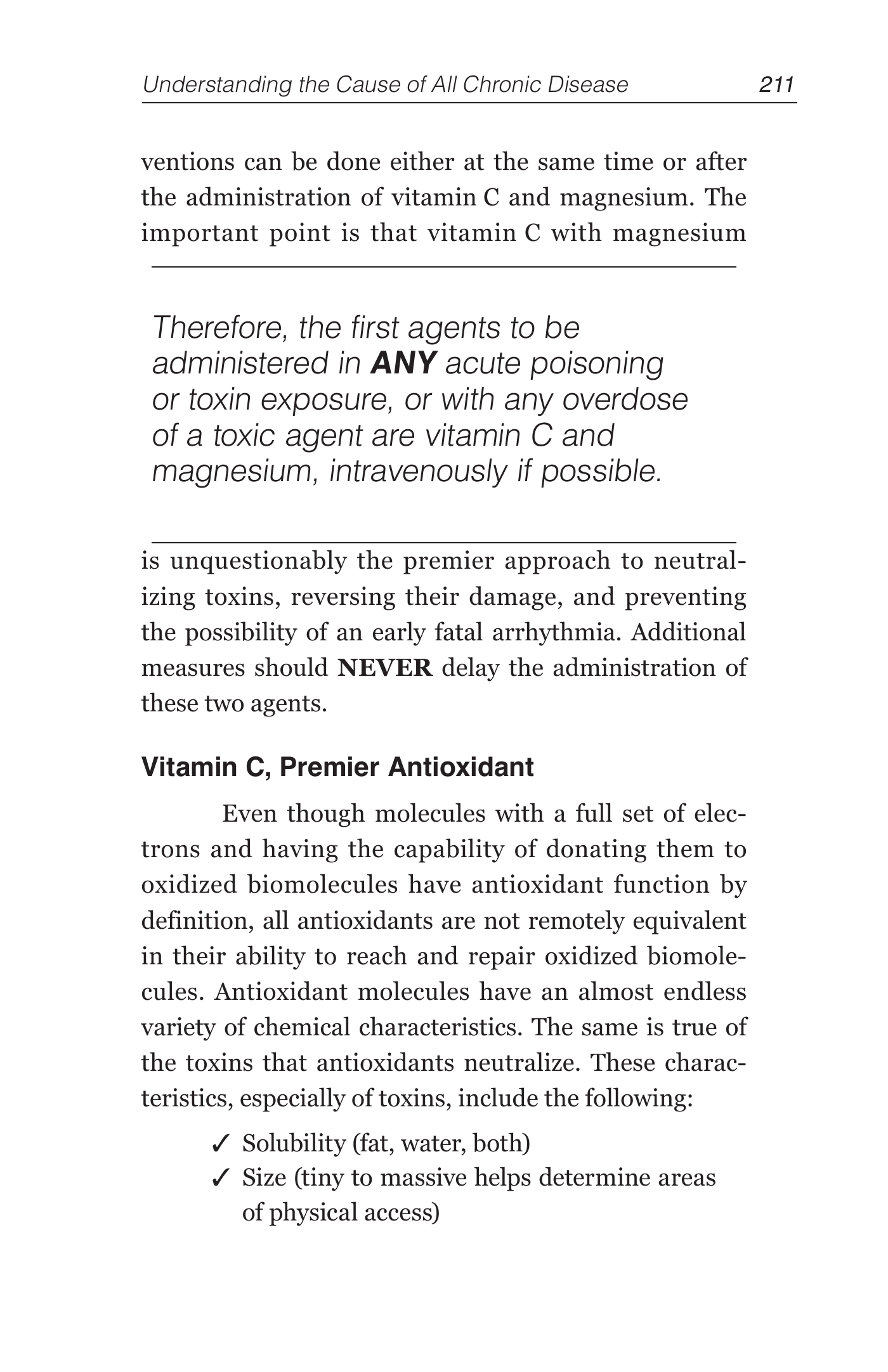
Redox Biology and Oxidative Stress Redox biology encompasses the interactions involved in the relay or transfer of electrons between molecules, particularly inside the cells. 1 Oxidation occurs when a biomolecule loses one or more elec- trons, and reduction occurs when a previously oxidized biomolecule regains its full complement of electrons. Biomolecules refer to the molecules that are produced by the body and intimately involved in the normal metabolic functions. 2 Such molecules include nucleic acids (RNA and DNA), lipids or fats, carbohydrates, proteins and enzymes, and structural molecules. The physiological significance of the balance of oxidation and reduction in the body is profound, as an oxidized biomolecule loses all or most of its normal role, or biochemical function. 3 It becomes a blank key, or a non-player. When a biomolecule is in its reduced form and is no longer electron-depleted, it fulfills its normal biochemical and physiological role. At a molecular level, then, the only “affliction” that any 201
Source page 203
Open original page 203 — full-size image

202 RAPID VIRUS RECOVERY
biomolecule has in ANY medical condition or disease is whether it is oxidized or reduced. It does not possess any additional characteristics unique to the disease to which it is contributing.
But excess oxidation beyond that needed to signal or trigger normal metabolic pathways is also what actually defines the pathophysiology of any “diseased” cell or tissue.
Determining whether biomolecules, cells, tissues, or organs are healthy and not part of a disease is straightforward and simple: to what degree is oxida- tion present? Expanding on this, the nature and extent of a clinical disease depends on the following oxidation characteristics: ✓ TYPE: Which biomolecules are oxidized? ✓ LOCATION: Where are the oxidized biomolecules? ✓ EXTENT: To what degree is a certain class of biomolecules oxidized (minimal, moderate, advanced)? ✓ TIME, CHRONICITY: How long have the affected biomolecules been oxidized?
This leads to a simple but important distinction:
Disease is NOT some ill-defined state that is CAUSED by oxidative stress.
Source page 204
Open original page 204 — full-size image
Understanding the Cause of All Chronic Disease 203
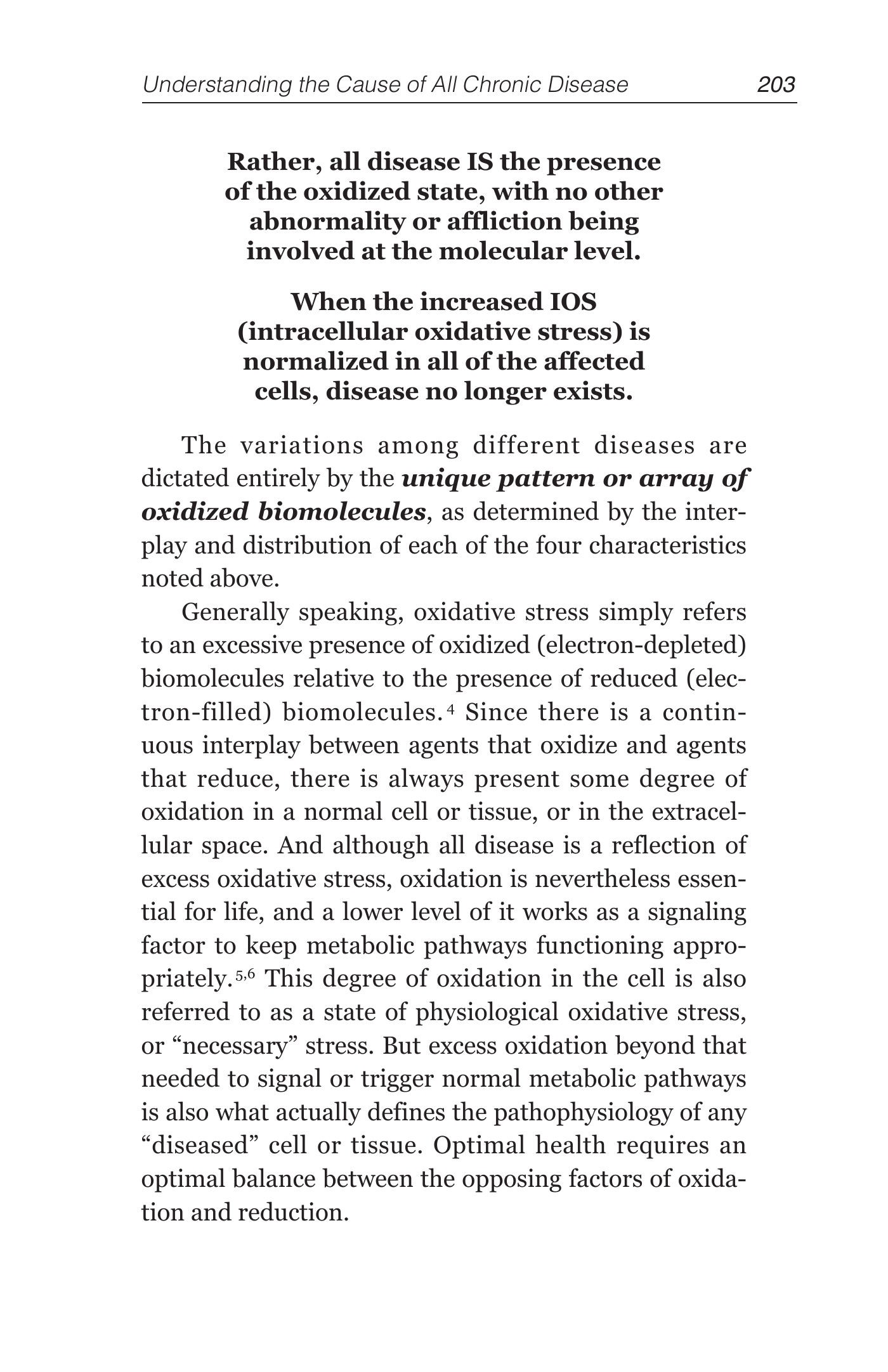
Rather, all disease IS the presence of the oxidized state, with no other abnormality or affliction being involved at the molecular level.
When the increased IOS (intracellular oxidative stress) is normalized in all of the affected cells, disease no longer exists.
The variations among different diseases are dictated entirely by the unique pattern or array of oxidized biomolecules, as determined by the inter- play and distribution of each of the four characteristics noted above. Generally speaking, oxidative stress simply refers to an excessive presence of oxidized (electron-depleted) biomolecules relative to the presence of reduced (elec- tron-filled) biomolecules. 4 Since there is a contin- uous interplay between agents that oxidize and agents that reduce, there is always present some degree of oxidation in a normal cell or tissue, or in the extracel- lular space. And although all disease is a reflection of excess oxidative stress, oxidation is nevertheless essen- tial for life, and a lower level of it works as a signaling factor to keep metabolic pathways functioning appro- priately. 5,6 This degree of oxidation in the cell is also referred to as a state of physiological oxidative stress, or “necessary” stress. But excess oxidation beyond that needed to signal or trigger normal metabolic pathways is also what actually defines the pathophysiology of any “diseased” cell or tissue. Optimal health requires an optimal balance between the opposing factors of oxida- tion and reduction.
Source page 205
Open original page 205 — full-size image
204 RAPID VIRUS RECOVERY
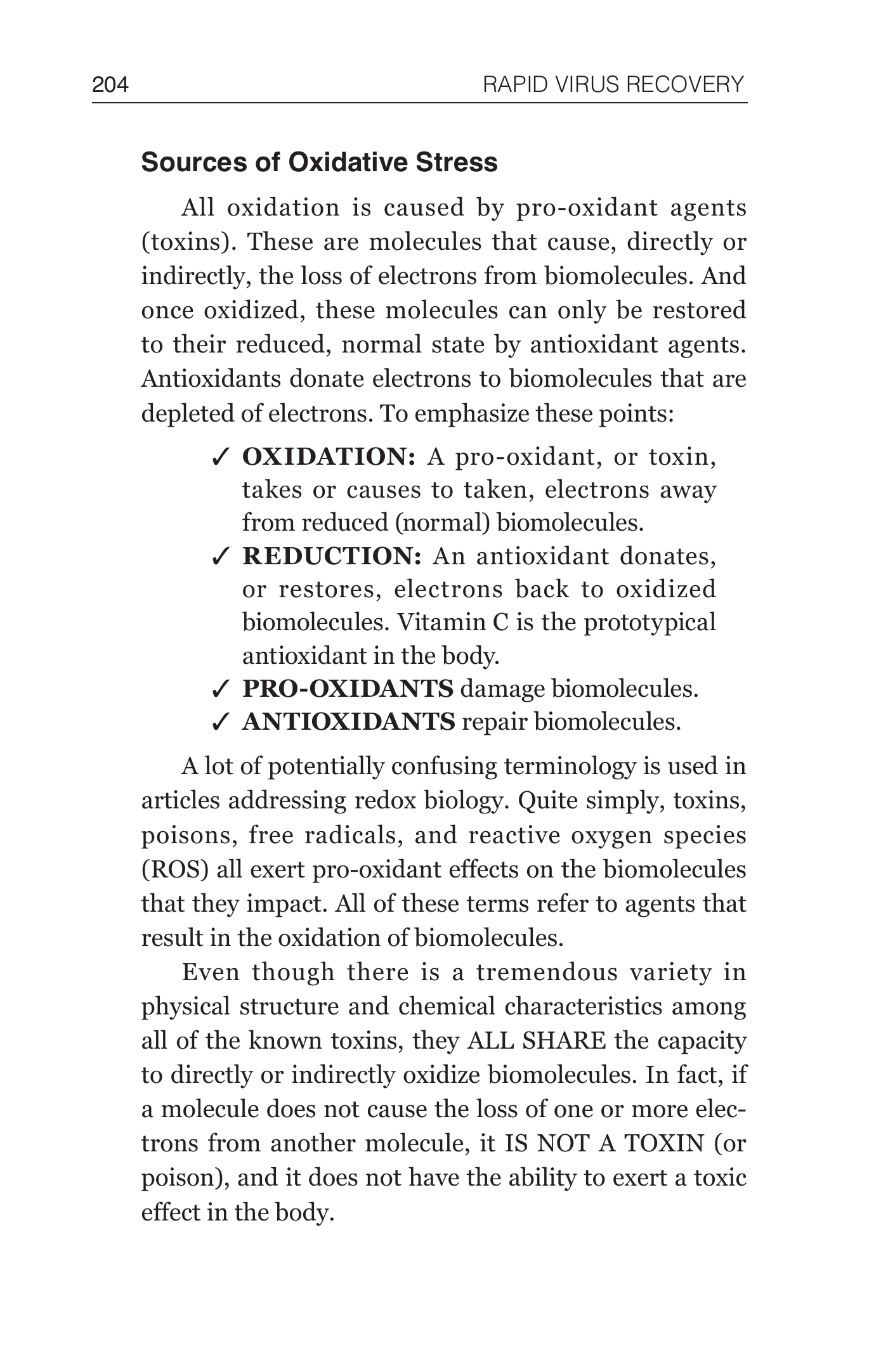
Sources of Oxidative Stress All oxidation is caused by pro-oxidant agents (toxins). These are molecules that cause, directly or indirectly, the loss of electrons from biomolecules. And once oxidized, these molecules can only be restored to their reduced, normal state by antioxidant agents. Antioxidants donate electrons to biomolecules that are depleted of electrons. To emphasize these points: ✓ OXIDATION: A pro-oxidant, or toxin, takes or causes to taken, electrons away from reduced (normal) biomolecules. ✓ REDUCTION: An antioxidant donates, or restores, electrons back to oxidized biomolecules. Vitamin C is the prototypical antioxidant in the body. ✓ PRO-OXIDANTS damage biomolecules. ✓ ANTIOXIDANTS repair biomolecules. A lot of potentially confusing terminology is used in articles addressing redox biology. Quite simply, toxins, poisons, free radicals, and reactive oxygen species (ROS) all exert pro-oxidant effects on the biomolecules that they impact. All of these terms refer to agents that result in the oxidation of biomolecules. Even though there is a tremendous variety in physical structure and chemical characteristics among all of the known toxins, they ALL SHARE the capacity to directly or indirectly oxidize biomolecules. In fact, if a molecule does not cause the loss of one or more elec- trons from another molecule, it IS NOT A TOXIN (or poison), and it does not have the ability to exert a toxic effect in the body.
Source page 206
Open original page 206 — full-size image

Understanding the Cause of All Chronic Disease 205
An antioxidant, on the other hand, can also be referred to as a molecule with positive nutrient value. Good nutrition is ultimately defined by how effec- tively and completely anything that is eaten or other-
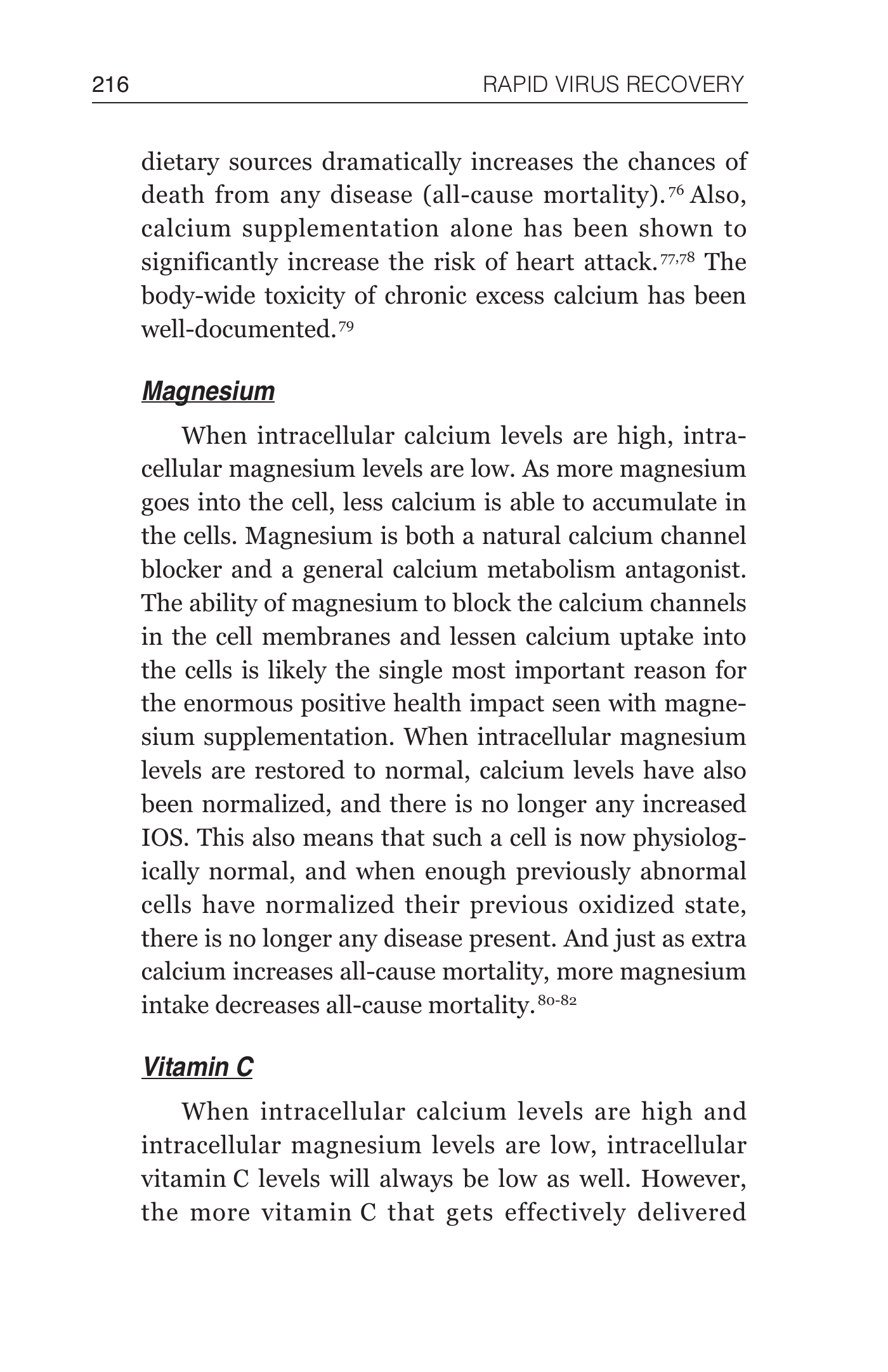
Optimal health requires an optimal balance between the opposing factors of oxidation and reduction.
wise assimilated into the body can be broken down to molecules with electron-donating capacity. At the molecular level, any molecule that depletes biomole- cules of electrons is a toxin or poison, and any molecule that restores oxidized biomolecules back to a normal electron status is a nutrient. Whether something is toxic or nutritious is deter- mined SOLELY by its ultimate impact on the oxida- tion/reduction balance in the tissues. Keeping these concepts in mind is important in designing optimal treatment protocols for any medical condition. The most clinically significant sources of toxins that promote disease states throughout the body are infec- tions. Acute viral syndromes inflict toxicity throughout the body, and some acute hemorrhagic fevers, like Ebola, so completely consume the vitamin C stores in the body that a fatal body-wide scurvy can rapidly appear, causing the hemorrhage referred to in its designation. However, the infections that play a prominent role in all chronic diseases are also chronic in nature, not acute. These are discussed at some length in Chapter
Source page 207
Open original page 207 — full-size image

206 RAPID VIRUS RECOVERY
4. There is a documented presence of pathogens chron- ically colonizing the pertinent tissue and organs in some chronic diseases. Furthermore, the pathogens that have been isolated in these tissues are typically those found in oral infections/colonizations. Many of these oral pathogens gain access to the rest of the body by direct expression into the venous blood and lymphatic circulation, as occurs when chewing with infected teeth. And many more gain access to the rest of the body as they are swallowed and then pass across the leaky gut that they help to create and sustain by the multiple oxidizing (toxic) agents associated with all pathogens. And this is further “multiplied” by the role that these swallowed pathogens play in causing an abnormal microbiome that produces its own pathogens
Additionally, these pathogens and toxins will feed any and all of the tissue sites of CPC that supply the ongoing new oxidative stress needed to sustain and worsen chronic diseases.
and toxins to sustain and worsen the leaky gut while gaining access across it to the rest of the body. As long as the CPC (chronic pathogen colonization) found in the aerodigestive tract of so many people is not eradi- cated, a huge “24/7” exposure to pathogens and toxins by the extensive interplay of factors addressed above will continue to disseminate body-wide.
Book introduction and complete contents · Previous section · Next section · Next part