The Only Cause of Disease: Healing by Reversing Pathology — Chapter 14 — Niacin, Vitamin C, and the Central Nervous System

Chapter 14 — Niacin, Vitamin C, and the Central Nervous System

The Only Cause of Disease: Healing by Reversing Pathology — Thomas E. Levy, MD, JD

Part 1 of 4; physical source pages 329–334.

Book introduction and complete contents · Previous section · Next section · Next part

Editorial notice — separate from the source: This is a faithful reproduction of the author’s published source, not an I-OM clinical guideline or endorsement of every claim. It is educational material, not individualized medical advice. The source’s original disclaimers and copyright notices are retained. Safety note: Do not use this reproduction as instructions for self-treatment. Hydrogen peroxide mist can irritate the respiratory tract; higher exposures can cause serious lung injury. See CDC/ATSDR safety guidance.

Unchanged original PDF


Source page 329

Open original page 329 — full-size image

Chapter 14 I was educated once—it took me years to get over it. Mark Twain

Niacin, Vitamin C, and the Central Nervous System

Toxicity Concerns Frequently Result in Severe Underdosing of Essential Nutrients Orthomolecular medicine is based on the concept that most chronic diseases are ultimately initiated and sustained by the chronic deficiency of one or more vitamins, minerals, nutrients, or other natural agents. When the deficiency can be lessened, the disease improves. Conversely, the worse the deficiency and the longer it persists in the body,ß the more advanced and entrenched the disease becomes. What is often unclear to both the public and many healthcare practitioners is that the clinical benefits of some nutrient supplements continue to increase as the doses are increased. These doses can vastly exceed the Recommended 329

Source page 330

Open original page 330 — full-size image

330 THE ONLY CAUSE OF DISEASE

Dietary [or Daily] Allowance (RDA) guidelines disseminated by the Food and Nutrition Board, a committee established by the United States National Academy of Sciences. Since 1997, the term Dietary Reference Intake (DRI) has been in use to describe much the same information as the RDA. The DRI recommendations have not significantly deviated from the earlier RDA recommendations. 1 While a few nutrients can become toxic even with intake that only minimally exceeds nutritional requirements (such as calcium, copper, and iron), many nutrients exhibit little toxicity at almost any dose. 2 Generally, it is difficult to push most vitamin doses to the point of clinical toxicity. However, many of the nutrient minerals can be taken to excess and result in various presentations of toxicity. Toxicity in this context refers to definable physiological damage to the supplement taker, not occasional side effects such as nausea in a sensitive stomach (niacin) or osmotic diarrhea (vitamin C or magnesium) when too much is not efficiently absorbed but accu- mulates in the colon instead.

However, the concern about potential toxicity keeps supplements like niacin, vitamin C, and magnesium severely underdosed, resulting in a loss of many of the incredible benefits they offer when optimally dosed.

Vitamins: Safe and Beneficial Vitamin C is the safest of all known nutrient supplements. A dose of vitamin C above which toxicity will reliably ensue has never been established. This is consistent with the fact that vitamin C is the molecule on which the physiology of all cells runs, and the healthy function of the body relies on having large amounts of it both inside and outside the cells. Arguably, vitamin C is the safest consumable agent in existence. Rare individuals can expe- rience minimal side effects, but this should not be confused with

Source page 331

Open original page 331 — full-size image

Niacin, Introduction Vitamin C, and the Central Nervous System 331

any degree of cell-damaging toxicity. By contrast, excessive water intake is toxic and can even be fatal. 3-5 The vitamin C RDA for older children and adults ranges from 45 to 90 mg per day. However, many people maintain a much higher level of general health when multigram supplementation is taken regularly, on the order of 100 times the RDA. Furthermore, the administration of vitamin C in doses 1,000 times the RDA is frequently given intravenously around the world for the treatment of a wide range of infections and medical conditions, with excellent effect and unrivaled safety. 6-8 These high doses of vitamin C are not only immensely ther- apeutic for infections and toxin exposures, but they also indicate that doses much higher than the RDA are entirely appropriate and normal for maintaining good health. In a study examining the impact of vitamin C on bone health, it was clearly ...the concern about shown that optimal dietary sources of potential toxicity vitamin C did not affect the risk of oste- keeps supplements oporotic fracture. In contrast, supple- like niacin, mental vitamin C was found to result in vitamin C, and fewer hip fractures. Similarly, another 9 magnesium severely study found that just dietary sources underdosed, of vitamin C had no significant impact resulting in a loss on bone mineral density. In contrast, of many of the supplemental vitamin C was able to incredible benefits increase bone mineral density substan- they offer when tially. 10 This is because it is difficult to optimally dosed. take in more than a few hundred milli- grams of vitamin C daily in just about any diet, while supplemental vitamin C doses much higher than can be achieved by diet (multigram and more) can be taken and are beneficial. This further indicates that most humans are geneti-

Source page 332

Open original page 332 — full-size image

332 THE ONLY CAUSE OF DISEASE

cally deficient in vitamin C production, resulting in general health impairment (see Chapter 11). Magnesium, like all minerals, can be pushed to toxic levels. However, it is almost impossible to induce toxicity with oral magne- sium intake, as the highest levels of intake will reliably induce an osmotic diarrhea from unabsorbed magnesium reaching the colon long before bodywide toxicity occurs. However, when administered intravenously, sufficient magnesium reliably lowers even the most elevated blood pressures to hypotensive levels. In some surgeries, magnesium is infused to deliberately lower blood pressure below normal levels, helping to achieve hemostasis and prevent excessive bleeding in the surgical field. 11-13 Very highly dosed infusions of magnesium should only be administered in a hospitalized setting. However, the addition of a few grams of magnesium can be safely infused over an hour or so in a clinic Of the 13 essential setting by adding a few grams to a ther- vitamins (A, C, D, apeutic vitamin/mineral IV bag. The E, K, B1, B2, B3, B5, appropriate administration of magne- B6, B7, B9, B12), sium by IV infusion is the most effective way to help restore low cellular levels increased intake of magnesium, especially in patients and/or increased who cannot take it orally in large blood levels have amounts. 14-15 Some caution and dosage been associated with adjustments are necessary for the clini- decreased all-cause cian when there is decreased kidney function. mortality for 11 of them. Just like vitamin C, but much less dramatically so, oral magnesium supple- mentation of several grams daily can be taken as long as the osmotic diarrhea is not induced. With a magnesium RDA of roughly 300 to 400 mg daily, the amounts of supplementation to keep most adults out of a significant deficiency

Source page 333

Open original page 333 — full-size image

Niacin, Introduction Vitamin C, and the Central Nervous System 333

of magnesium will be in the range of 5-fold or more of this RDA. Furthermore, very few people can reach an optimal magnesium status with oral supplementation. Rather, the practical goal is to minimize the degree of magnesium deficiency. Nevertheless, as a significant magnesium deficiency can cause certain diseases and exacerbate others, taking as much magnesium supplementation as can be readily tolerated is always a good idea. 16 Of the 13 essential vitamins (A, C, D, E, K, B1, B2, B3, B5, B6, B7, B9, B12), increased intake and/or increased blood levels have been associated with decreased all-cause mortality for 11 of them. 17-25 Studies establishing the same associations with biotin (vitamin B7) and pantothenic acid (vitamin B5) were not found. For the most part, these studies have only examined vitamin intakes within the range of the RDA or DRI values, further supporting their critical role in promoting good health, even when ingested in relatively small amounts. While toxic effects can be observed with excessive dosing of vitamin A, vitamin D, or vitamin E, the rest have RDA or DRI values that can be greatly exceeded without adverse health effects, resulting instead in improved health and blood chemistries.

Niacin: Nomenclature and Physiology Confusion can easily arise in sorting through the literature on niacin and its derivatives. niacin is vitamin B3. It is also known as nicotinic acid. These are all synonyms for the chemically identical substance. niacin, vitamin B3, and nicotinic acid are completely interchangeable terms. For completeness, niacin is sometimes, although rarely, referred to in the literature as “vitamin PP,” with the PP meaning “pellagra-preventive.” Pellagra is the clinical condition that results from a severe deficiency of niacin in the body. 26 Niacin has several vitamers. Vitamers are derivatives or related chemical substances that fulfill the same specific vitamin func- tions despite not being chemically identical. Niacin derivatives that

Source page 334

Open original page 334 — full-size image

334 THE ONLY CAUSE OF DISEASE

qualify as vitamers include niacinamide (also known as nicotin- amide or nicotinic acid amide), nicotinamide riboside, and nicotin- amide mononucleotide. Referring to nicotinamide as niacinamide decreases the likelihood of niacin and its vitamers being perceived by the public Large amounts of as having nicotine-like properties, NAD are essential for which they do not. All these substances optimizing electron promote the biosynthesis of NAD (nicotinamide adenine dinucleotide) flow in the first of throughout the body, and they are the the four steps of the primary precursors of NAD. 27-28 electron transport Large amounts of NAD are essen- chain (ETC). tial for optimizing electron flow in the first of the four steps of the electron transport chain (ETC). Located along the membranes of the mito- chondria inside every cell, the ETC is responsible for the production of nearly all the ATP (adenosine triphosphate) in the body. ATP is the most critical energy-providing molecule in the body. Any compromise in its production results in a decline in the healthy function of all tissues and organs affected. Decreased ATP levels also result in reduced vitamin C levels. When deficient amounts of NAD are present at the beginning of the ETC, sufficient ATP cannot be generated.

Optimizing the production of NAD for ATP synthesis in the cells is the most critical function of niacin and its vitamers.

Furthermore, greater deficiencies in available NAD result in even more pronounced declines in cellular function throughout the body. Along with cellular vitamin C, nothing is more critical for optimal health than maximal amounts of intracellular ATP. 29 Low NAD levels have been recognized as a sign of aging in not


Book introduction and complete contents · Previous section · Next section · Next part

Chapter 14 — Niacin, Vitamin C, and the Central Nervous System

The Only Cause of Disease: Healing by Reversing Pathology — Thomas E. Levy, MD, JD

Part 2 of 4; physical source pages 335–340.

Book introduction and complete contents · Previous section · Next section · Previous part · Next part

Unchanged original PDF


Source page 335

Open original page 335 — full-size image

Niacin, Introduction Vitamin C, and the Central Nervous System 335

only humans, but in all living cells, including those in animals and insects. 30-36

Niacin Supplementation Names of forms of niacin supplementation that directly fuel NAD production in the body: ✓ Niacin ✓ Niacinamide ✓ Nicotinamide ✓ Nicotinamide riboside ✓ Nicotinamide mononucleotide ✓ Inositol hexaniacinate ✓ Inositol hexanicotinate Notably, niacin has an additional important property that its vitamers do not possess. Reported as early as 1955, niacin has been documented to lessen the abnormal lipid parameters that promote atherosclerosis. 37-39 It reduces triglycerides and the lipoproteins VLDL and LDL while raising HDL, the “good” lipoprotein. 40 If well-tolerated, niacin is the better supplement form of those listed above, as it has both a positive impact on lipids and NAD levels in the body. It also costs less. However, niacin causes a warm to hot flushing effect in many people who supplement it. While for many people this flushing effect is either minimal or disappears after several doses, for others it is intolerable. The other supplement forms noted above are “flush-free” and can be easily taken by nearly everyone. The downside is that the non-flushing forms do not have the positive lipid impact of unmodified niacin. Niacin and all its vitamers profoundly impact ATP gener- ation throughout the body, as noted above. However, like many other powerful orthomolecular therapies, the niacin RDA and DRI recommendations are amazingly tiny, completely misleading the health seeker as to their importance and the impact of much higher doses. The optimal energy-supporting doses of niacin can

Source page 336

Open original page 336 — full-size image

336 THE ONLY CAUSE OF DISEASE

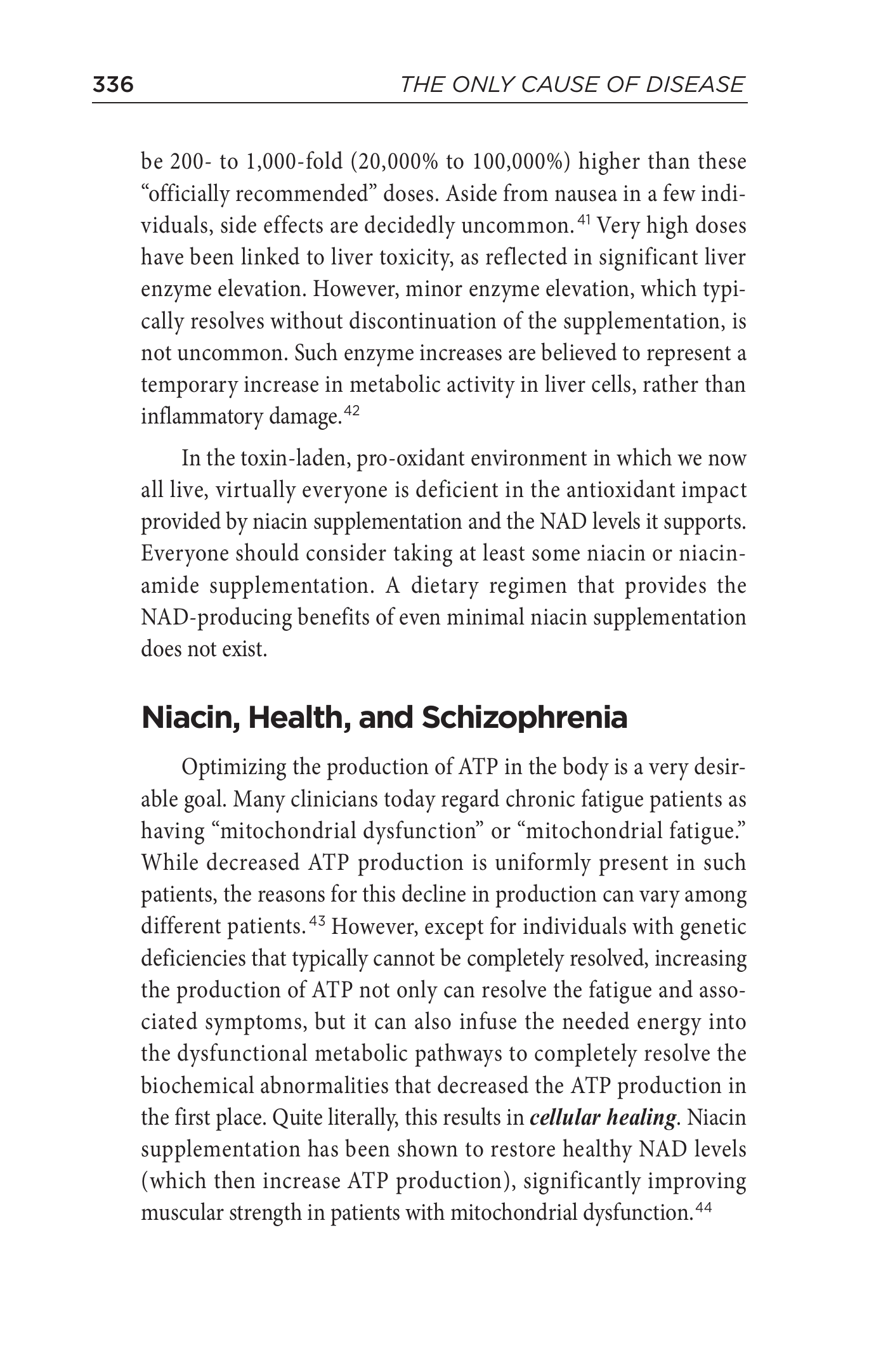
be 200- to 1,000-fold (20,000% to 100,000%) higher than these “officially recommended” doses. Aside from nausea in a few indi- viduals, side effects are decidedly uncommon. 41 Very high doses have been linked to liver toxicity, as reflected in significant liver enzyme elevation. However, minor enzyme elevation, which typi- cally resolves without discontinuation of the supplementation, is not uncommon. Such enzyme increases are believed to represent a temporary increase in metabolic activity in liver cells, rather than inflammatory damage. 42 In the toxin-laden, pro-oxidant environment in which we now all live, virtually everyone is deficient in the antioxidant impact provided by niacin supplementation and the NAD levels it supports. Everyone should consider taking at least some niacin or niacin- amide supplementation. A dietary regimen that provides the NAD-producing benefits of even minimal niacin supplementation does not exist.

Niacin, Health, and Schizophrenia Optimizing the production of ATP in the body is a very desir- able goal. Many clinicians today regard chronic fatigue patients as having “mitochondrial dysfunction” or “mitochondrial fatigue.” While decreased ATP production is uniformly present in such patients, the reasons for this decline in production can vary among different patients. 43 However, except for individuals with genetic deficiencies that typically cannot be completely resolved, increasing the production of ATP not only can resolve the fatigue and asso- ciated symptoms, but it can also infuse the needed energy into the dysfunctional metabolic pathways to completely resolve the biochemical abnormalities that decreased the ATP production in the first place. Quite literally, this results in cellular healing. Niacin supplementation has been shown to restore healthy NAD levels (which then increase ATP production), significantly improving muscular strength in patients with mitochondrial dysfunction. 44

Source page 337

Open original page 337 — full-size image

Niacin, Introduction Vitamin C, and the Central Nervous System 337

Ultimately, all such dysfunction within the cytoplasm, as well as within the mitochondria, stems from an increased number of inactivated, oxidized biomolecules (increased intracellular biomole- cule oxidation—increased IBO) relative to the number of normal, reduced The heart muscle biomolecules. This is traditionally in heart failure is a referred to simply as increased intra- classic example of cellular oxidative stress. Improvements in all pathological states can be antici- a tissue severely pated with increased ATP production. depleted of ATP, However, certain conditions, such as unable to respond to muscle fatigue from low ATP levels, significant exercise can be expected to respond even more with a sufficiently dramatically. The heart muscle in increased heart failure is a classic example of a production of ATP. tissue severely depleted of ATP, unable to respond to significant exercise with a sufficiently increased production of ATP. 45 Endomyocardial biopsies have shown that the heart muscle in congestive and hypertrophic cardiomyopathies has significantly depressed levels of both ATP and NAD. 46 Normal heart muscle has the highest NAD levels in the body. 47 In both congestive and hypertrophic cardiomyopathy, impaired energy metabolism has been identified. 48 Consistent with these findings, the eleva- tion of NAD levels in different studies has been shown to improve atherosclerosis as well as other forms of heart failure, including ischemic, hypertrophic, and congestive cardiomyopathies. 49-50 In an animal study, niacin has also been shown to lessen damage in myocardial infarction. 51 Studies in both animals and humans have shown that niacinamide can lower elevated blood pressures and decrease cardiac mortality. 52-53 In a mouse model of cardiac arrest, niacinamide administration was able to normalize NAD levels and improve survival. 54

Source page 338

Open original page 338 — full-size image

338 THE ONLY CAUSE OF DISEASE

Niacin vitamer supplementation in humans has been clearly shown to increase blood levels of NAD dramatically. 55 Not surpris- ingly, NAD-increasing agents, with their strong support of ATP production, are also increasingly appreciated for their utility in both anti-aging and overall good health. 56-61 ...like niacinamide, In an animal study of sepsis, arguably the most advanced and dire of medical CoQ10 improves conditions, a niacin vitamer was shown heart failure patients to increase survival and prevent the lung with preserved and heart injury otherwise seen. 62 ejection fractions Some studies suggest that lower (hypertrophic NAD and ATP levels are primary abnor- cardiomyopathy malities that contribute to the devel- with diastolic opment of cancer. 63-65 In one human study, it was demonstrated that niacin- dysfunction). amide supplementation was effec- tive in reducing the incidence of new skin cancers. This is consistent with the pellagra-associated skin 66

inflammation (dermatitis) seen when niacin levels are very low. 67 Higher niacin intake has been linked to a decreased risk of all-cause mortality, indicating its importance in every cell of the body. 68-69 The clinical effectiveness of daily multigram niacinamide dosing depends on how severely the affected tissues or organs in a disease are depleted of the NAD needed to make ATP. Heart failure, although not always responsive to increased NAD production, often responds dramatically to an improved NAD status. A significant number of patients with congestive cardiomyopathy and low cardiac output have been spared heart transplantation after adequately dosed Coenzyme Q10 (CoQ10), another agent capable of increasing ATP production via the ETC in the mitochondria. In many of these patients, ejection fractions have increased dramatically, and all-cause mortality decreased, along with improved exercise capacity. 70-76 Also, like niacinamide, CoQ10 improves heart failure

Source page 339

Open original page 339 — full-size image

Niacin, Introduction Vitamin C, and the Central Nervous System 339

patients with preserved ejection fractions (hypertrophic cardiomy- opathy with diastolic dysfunction). 77-78 N iacinamide also upregulates ETC activity, resulting in the production of more ATP. In addition to its ability to be directly converted into NAD, niacinamide also supports the formation of more CoQ10. More specifically,

Niacinamide has been shown to enhance acetyl-CoA production, which in turn improves the biosynthesis of CoQ10.

This means that niacinamide supplementation can provide the substrates needed for both NAD and CoQ10 production, directly helping to power two of the four steps of the ATP-producing ETC. And CoQ10 also supports the first two steps of the ETC. 79-80 Like the heart muscle, the brain and central nervous system (CNS) require very high levels of ATP for normal function relative to the rest of the body. As such, having inadequate building blocks for ATP production in the body will be reflected more often and more prominently in the nervous system and psychiatric disor- ders than in other medical conditions, in addition to its impor- tance in heart disease. Many studies have indicated that niacinamide is essential for the development, growth, and maintenance of the CNS. 81-83 Furthermore, niacinamide has been shown to readily pass the blood-brain barrier in both directions, supporting its supple- mentation as a simple and effective approach to treating various CNS conditions. 84 Additionally, oral niacinamide supplementation has been demonstrated to be very well-absorbed. 85 Animal studies have shown that niacinamide will protect against ischemia-induced (decreased blood supply) damage in the brain and CNS. Neuronal death is reduced, and the recovery of affected sensory and motor function is improved as well. 86-89

Source page 340

Open original page 340 — full-size image

340 THE ONLY CAUSE OF DISEASE

Significant infection protection and resolution can be seen when NAD production is optimized with niacin and several other NAD-producing agents. Increased levels of niacin support recovery from sepsis. COVID has also been shown to resolve more rapidly with Alzheimer’s, agents that help to optimize cellular Parkinson’s, ATP levels. 90-93 Improved outcomes amyotrophic lateral in COVID-related acute kidney injury sclerosis (ALS), have been seen with niacinamide therapy. 94 Niacinamide has also been and schizophrenia shown to lessen inflammation-induced have all been renal failure in an animal model. 95 documented to have It has a protective effect against the pathogens, their pro-inflammatory toxicity of paraquat toxic metabolites, in rats. 96 or both present in Severe niacin deficiency results the affected nervous in a disease known as pellagra. This syndrome has been characterized by a tissue. triad of symptoms: delirium, derma- titis, and diarrhea. More accurately, the triad should be referred to more broadly as neurocognitive, dermatological, and gastrointestinal symptoms. A substantial vari- ation in this symptom pattern can be observed, as the circum- stances resulting in a deficiency of niacin can lead to a variety of other significant nutrient and micronutrient deficiencies in a given patient. 97-99 Nevertheless, the complete restoration of niacin levels in the body, along with the micronutrients supplied by a balanced diet, reliably resolves the symptoms of pellagra, including those involving the CNS. The neurocognitive symptoms in patients with severe niacin deficiency are always present, and they can be very pronounced clinically. Both Alzheimer’s disease and Parkinson’s disease typically have depleted NAD levels in the affected tissue, and some of their


Book introduction and complete contents · Previous section · Next section · Previous part · Next part

Chapter 14 — Niacin, Vitamin C, and the Central Nervous System

The Only Cause of Disease: Healing by Reversing Pathology — Thomas E. Levy, MD, JD

Part 3 of 4; physical source pages 341–346.

Book introduction and complete contents · Previous section · Next section · Previous part · Next part

Unchanged original PDF


Source page 341

Open original page 341 — full-size image

Niacin, Introduction Vitamin C, and the Central Nervous System 341

symptoms can be lessened with increased niacin intake. 100 Other CNS symptoms, including disorientation, memory loss, confusion, dementia, poor sleep, and even frank psychosis, can be seen in the severely niacin-deficient patient. 101 Of note, the statistical risk of developing Parkinson’s disease is lessened in individuals having an increased consumption of niacin-containing foods. 102-103 Schizophrenia is one of the most devastating diseases, with enormous negative societal impact in addition to the incapacitating symptoms endured by the patient. Advanced schizophrenia effec- tively results in the complete loss of a functional life. 104 Chronically increased oxidative stress defines a state of chronic inflammation in the brain (neuroinflammation). The presence of chronic inflam- mation in the brains of schizophrenic patients has been well-doc- umented. 105-106 Studies have shown that schizophrenia in younger individuals can be initiated following exposure to the toxins, or pro-oxidants, encountered in prenatal exposures to infection. 107-108 Consistent with this, many cases of schizophrenia Both Alzheimer’s start early in life with toxin-induced disease and abnormal neurodevelopment. 109-110 Parkinson’s disease typically have The symptoms of schizophrenia are numerous and diverse, with some depleted NAD levels symptoms assuming a much more prom- in the affected inent role in one patient versus another. tissue, and some The bulk of the literature recounts the of their symptoms classical and well-known symptoms of can be lessened schizophrenia that focus solely on brain with increased dysfunction. Such symptoms include niacin intake. hallucinations, delusions with loss of contact with reality, difficulty thinking clearly, and social/emotional withdrawal, sometimes to the point of staying in an essentially motionless, catatonic state. However, it has also been recognized that symptoms not directly referable to brain

Source page 342

Open original page 342 — full-size image

342 THE ONLY CAUSE OF DISEASE

dysfunction are often present as well. These include the classical symptoms of pellagra, a potentially fatal condition secondary to severe niacin deficiency in the body. The niacin deficiency in pellagra can result in brain and CNS pathology manifesting as irritability, difficulty concentrating, some social withdrawal, depression, manic depression, insomnia, delirium, hallucinations, coma, and even frank psychosis. Some authors have referred to this as “pellagroid encephalopathy.” 111 Furthermore, the psychosis with associated delusions that some- times occurs in pellagra can be indistinguishable from some cases of schizophrenia. 112 These symptoms all typically resolve with adequate restoration and maintenance of niacin levels in the brain and the body. 113 The effective use of niacin for psychiatric symptoms has also spawned the concept of “reversible dementia,” a remarkable term since dementia is generally considered to be progressive and non-resolving in nature, especially in older individuals. 114 Similarly, the close relationship between pellagra and brain dysfunction has spawned the term “niacin-responsive subset of schizophrenia.” 115

The niacin deficiency in pellagra always has symp- toms of brain dysfunction, and niacin restoration treats them very effectively.

Pellagra causes significant gastrointestinal problems and symptoms. This is significant in understanding the contribution and worsening that a pellagra-related leaky gut with a pathogen-over- grown microbiome does to diseases of the CNS (and elsewhere in the body).

Alzheimer’s, Parkinson’s, amyotrophic lateral scle- rosis (ALS), and schizophrenia have all been docu- mented to have pathogens, their toxic metabolites, or both present in the affected nervous tissue. 116-127

Source page 343

Open original page 343 — full-size image

Niacin, Introduction Vitamin C, and the Central Nervous System 343

The damage that niacin deficiency (pellagra) does to the micro- biome is a major factor in the associated neuropsychiatric problems and schizophrenia-like symptoms seen with it as well. Niacin defi- ciency not only results in decreased energy production in the brains of people with schizophrenia, but it also results in the continued exposure to pathogens and/or their toxic metabolites from an abnormal gut microbiome to the CNS of those patients. Schizophrenia most commonly appears in late adolescence or early adulthood. 128 However, it can also occur later in life. If left unchecked, increased intracellular oxidative stress results in the premature death of the affected cells. Brain volume studies have established that schizophrenic patients progressively lose gray matter and the actual physical mass of the brain over time, well beyond the deterioration seen with aging. 129-132 Microglia, the scav- enger white blood cells of the brain, become activated in the inflam- mation associated with schizophrenia. 133-135 Pro-inflammatory cytokines and other inflammatory markers are also increased. 136-138 All this information leads to the following assertion:

Schizophrenia is a chronic encephalitis.

Encephalitis is inflammation of the brain, typically occur- ring acutely in conjunction with a new viral infection, precip- itating widespread inflammation throughout the brain and CNS. In schizophrenia, the chronically elevated inflamma- tory parameters indicate that ongoing inflammation is causing the signs and symptoms of schizophrenia. Schizophrenia = chronic brain inflammation = chronic encephalitis. 139 Many of the symptoms seen in acute encephalitis of the brain are also seen in the chronic encephalitis of the brain of the schizo- phrenic patient, including alterations in consciousness, confu- sion, hallucinations, and cognitive impairment. Some authors have descriptively referred to schizophrenia as “the shattered

Source page 344

Open original page 344 — full-size image

344 THE ONLY CAUSE OF DISEASE

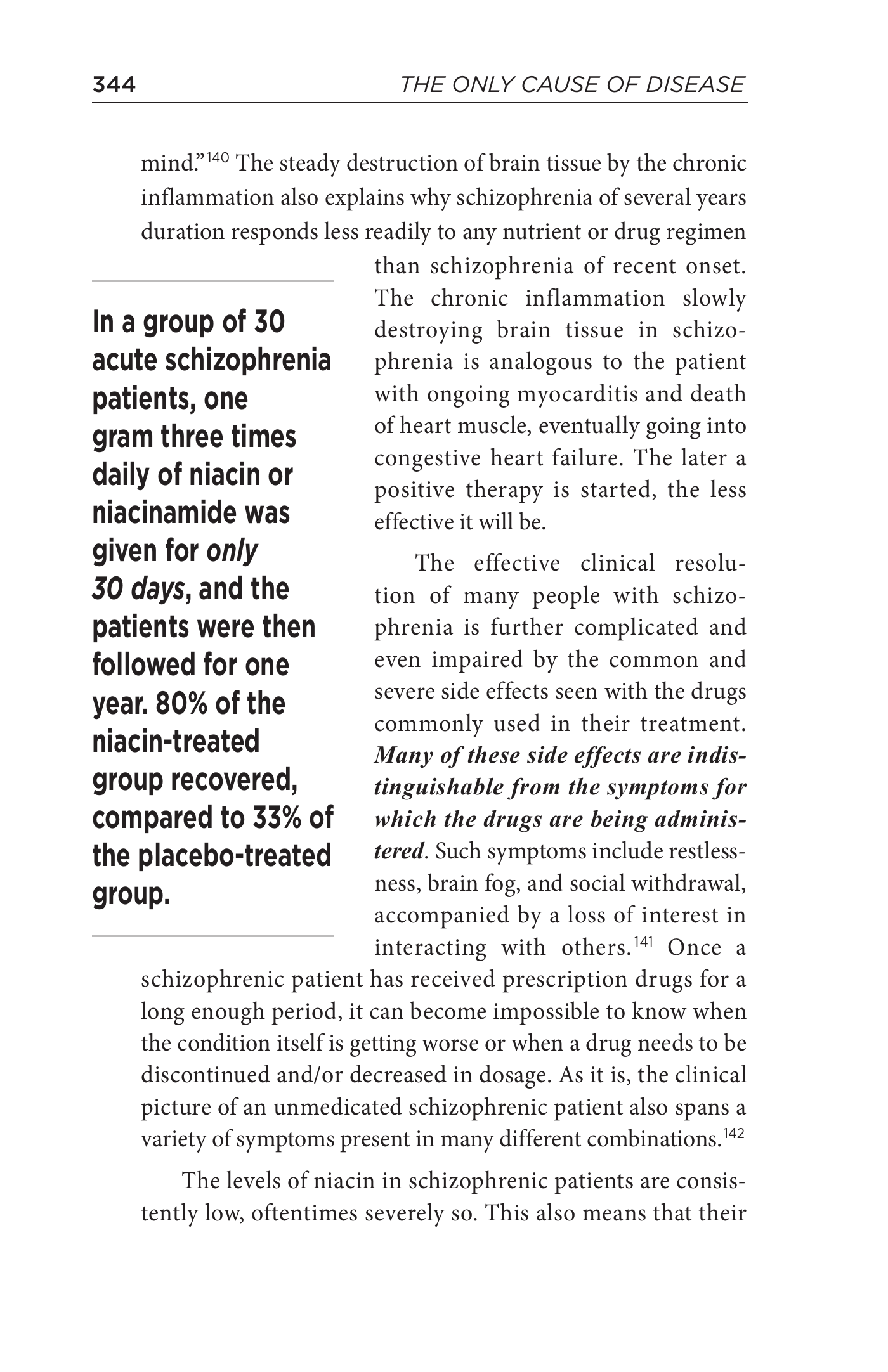
mind.” 140 The steady destruction of brain tissue by the chronic inflammation also explains why schizophrenia of several years duration responds less readily to any nutrient or drug regimen than schizophrenia of recent onset. The chronic inflammation slowly In a group of 30 destroying brain tissue in schizo- acute schizophrenia phrenia is analogous to the patient patients, one with ongoing myocarditis and death of heart muscle, eventually going into gram three times congestive heart failure. The later a daily of niacin or positive therapy is started, the less niacinamide was effective it will be. given for only The effective clinical resolu- 30 days, and the tion of many people with schizo- patients were then phrenia is further complicated and followed for one even impaired by the common and severe side effects seen with the drugs year. 80% of the commonly used in their treatment. niacin-treated Many of these side effects are indis- group recovered, tinguishable from the symptoms for compared to 33% of which the drugs are being adminis- the placebo-treated tered. Such symptoms include restless- ness, brain fog, and social withdrawal, group. accompanied by a loss of interest in interacting with others. 141 Once a schizophrenic patient has received prescription drugs for a long enough period, it can become impossible to know when the condition itself is getting worse or when a drug needs to be discontinued and/or decreased in dosage. As it is, the clinical picture of an unmedicated schizophrenic patient also spans a variety of symptoms present in many different combinations. 142 The levels of niacin in schizophrenic patients are consis- tently low, oftentimes severely so. This also means that their

Source page 345

Open original page 345 — full-size image

Niacin, Introduction Vitamin C, and the Central Nervous System 345

cellular ATP levels are significantly depressed as well. It has been clearly shown that highly dosed (relative to RDA or DRI recommendations) niacin (or a niacin vitamer) often completely resolves schizophrenia, even in its advanced stages. And when clinical resolution is not complete, significant improvement in the major symptoms of schizophrenia is nearly always seen. In a group of 30 acute schizophrenia patients, one gram three times daily of niacin or niacinamide was given for only 30 days, and the patients were then followed for one year. 80% of the niacin-treated group recovered, compared to 33% of the placebo-treated group. 143 Recovery in acute or chronic schizophrenia was only considered to have been reached when the patient ✓ Had complete disappearance of disease- related symptoms and signs, ✓ was interacting normally with family members as well as members of the community, ✓ and became gainfully employed. Vitamin C, a perfect treatment for any condition involving chronic inflammation (which is the case for all conditions), was also often administered in doses of 1 to 10 grams daily. As the primary antioxidant (anti-inflammatory agent) in the body, vitamin C should always be used to help resolve the brain inflammation of schizophrenia, or inflammation anywhere else, since the primary characteristic of inflamed tissue is severe vitamin C depletion in that tissue. 144 Much higher doses will always help, and sometimes dramatically so, especially in schizophrenia of recent onset. While not typical, acute schizophrenia can spontaneously resolve. Presumably, the factors provoking inflammation in the brains of these patients eventually resolve or become signifi-

Source page 346

Open original page 346 — full-size image

346 THE ONLY CAUSE OF DISEASE

cantly less pronounced (e.g., infection, toxin, autoimmune reaction, micronutrient deficiency). Six more double-blind, randomized, and controlled clinical trials confirmed the positive Niacin cures acute impact of niacin on the recovery of schizophrenia most schizophrenic patients. 145-146 Many of the most chronic patients (with of the time. And the most structural brain damage) substantial clinical required this therapy for five or improvement is the more years to derive clear benefits. 147 rule, even when For the niacin treatment of schizo- a complete cure phrenia, the starting dose was 1,000 is not realized in mg three times daily, with the dose either acute or slowly increased to as much as 4,500 to 18,000 mg daily, depending on long-standing clinical response. For those treated schizophrenia. with niacinamide rather than niacin, the daily dose rarely exceeded 6,000 mg due to the increased problems with nausea and stomach sensitivity. 148-150 Dr. Abram Hoffer treated over 5,000 schizophrenic patients with this niacin protocol. No deaths ever resulted from the administration of niacin. Furthermore, consistent with the wide-ranging positive effects of niacin on NAD levels throughout the body described above, Hoffer noted improvements in many symptoms not directly attributable to schizophrenia in his niacin-treated patients. 151 He also devel- oped a more comprehensive orthomolecular approach to treating schizophrenia over the years of his clinical practice. 152 Currently, over 85% of chronic schizophrenic patients treated with traditional measures never resolve, even if some treatment benefits are realized. Instead, they remain sick and dysfunc-


Book introduction and complete contents · Previous section · Next section · Previous part · Next part

Chapter 14 — Niacin, Vitamin C, and the Central Nervous System

The Only Cause of Disease: Healing by Reversing Pathology — Thomas E. Levy, MD, JD

Part 4 of 4; physical source pages 347–350.

Book introduction and complete contents · Previous section · Next section · Previous part

Unchanged original PDF


Source page 347

Open original page 347 — full-size image

Niacin, Introduction Vitamin C, and the Central Nervous System 347

tional for the rest of their lives when niacin is not at least a part of their treatment program. The following can be definitively asserted:

Niacin cures acute schizophrenia most of the time. And substantial clinical improvement is the rule, even when a complete cure is not realized in either acute or long-standing schizophrenia. Nev- ertheless, the adoption of a proper niacin-based treatment protocol for acute schizophrenia would eliminate the existence of advanced chron- ic schizophrenia and its associated irreversible brain damage.

As covered above, schizophrenia, with its close connec- tion to pellagra, is a condition precipitated and worsened by multiple factors. A quality diet and a wide array of vitamins and mineral nutrients are mandatory for an optimal clinical response in all these patients. Several reasons account for the varied (but positive) clinical responses of schizophrenia patients treated with niacin. 153 Nevertheless, monotherapy with niacinamide has completely resolved schizophrenia. 154 As an essential and non-toxic nutrient, niacin (or niacinamide) should never be denied to any patient with any brain disorder, much less schizophrenia. As Dr. Hoffer put it: “Apparently, the worst sin in orthodox medicine is to see a recovery for the wrong reason.” The production of ATP, the final physiological goal of the ETC in the cells of the body, is specifically nurtured and supported not only by niacin but also by riboflavin, CoQ10, and methylene blue. These four agents directly power the different steps in the mitochondrial ETC needed to optimize ATP production, which directly supports and promotes all healing and good health. And when permanent brain damage

Source page 348

Open original page 348 — full-size image

348 THE ONLY CAUSE OF DISEASE

is minimal and the symptoms are due to ongoing neuroinflam- mation, an excellent clinical response can be anticipated, even if a complete cure is not realized. Niacin, CoQ10, and ribo- flavin comprise a nutrient triad that has been shown to benefit the antioxidant status of breast cancer patients. 155-157 And even though vitamin B3 is essential for optimal health, its optimal dosing is achieved by few individuals. While it is suitable for everyone, and not just for the brain, it nevertheless needs to be asserted that:

Anybody with ANY psychological, behavioral, and/or psychiatric condition should take niacin or one of its vitamers, and the dose should be maximized before considering such a condition permanent or unresponsive.

Currently, the standard of care in psychiatry does not include the routine administration of niacin or niacinamide for schizophrenia or any other mental or emotional disorder.

While the established standard of practice is usually sufficient to protect a physician from malpractice, deliberately avoiding the usage of niacin for schizophrenia after being exposed to much of the literature and information cited in this chapter nevertheless constitutes clear medi- cal malpractice, even if it remains unadjudicated.

Healthcare practitioners have an obligation, albeit rarely honored, to stay informed on the science of old, current, and new therapies. The benefit of niacin therapy in schizophrenia and most brain disorders is certainly not a new discovery. As with all other conditions that have been shown to benefit from an orthomolecular approach to addressing vitamin, mineral, and other nutrient deficiencies, a healthcare practitioner

Source page 349

Open original page 349 — full-size image

Niacin, Introduction Vitamin C, and the Central Nervous System 349

should always be open to all legitimate scientific information that the patient might offer. If a practitioner refuses to review or discuss such information with the patient, it is time to find a new one.

You do not need a doctor’s prescription to take niacin, and there are no absolute contraindica- tions to its use. You can take it for yourself, and you can advise any friend or family member with a neurological or psychiatric condition that you have information indicating that it is often bene- ficial, regardless of the precise diagnosis.

Recap Niacin and its related compounds have a long history of improving the mental status of a wide variety of mental and emotional disorders. It has been shown to cure or significantly improve most cases of schizophrenia for which it is properly dosed. A severe deficiency of NAD primarily causes these disorders by not properly fueling the ETC in the ATP-generating mitochondria in all cells. The primary role of niacin is to increase NAD levels, resulting in an improved or even normalized amount of cellular ATP, the most crucial energy-providing molecule in the body. While many other nutrients will be of benefit in schizophrenia, highly dosed vitamin C and magnesium should always be given to further control and quell the ongoing neuroinflammation. Pellagra, the disease established to occur after severe and long- standing niacin deficiency, typically presents with significant brain dysfunction, sometimes clinically identical to schizophrenia. niacin administration often completely resolves such states of psychosis, further supporting the concept that NAD depletion, leading to depressed ATP levels in the brain, is the root cause of schizophrenia.

Source page 350

Open original page 350 — full-size image

350 THE ONLY CAUSE OF DISEASE

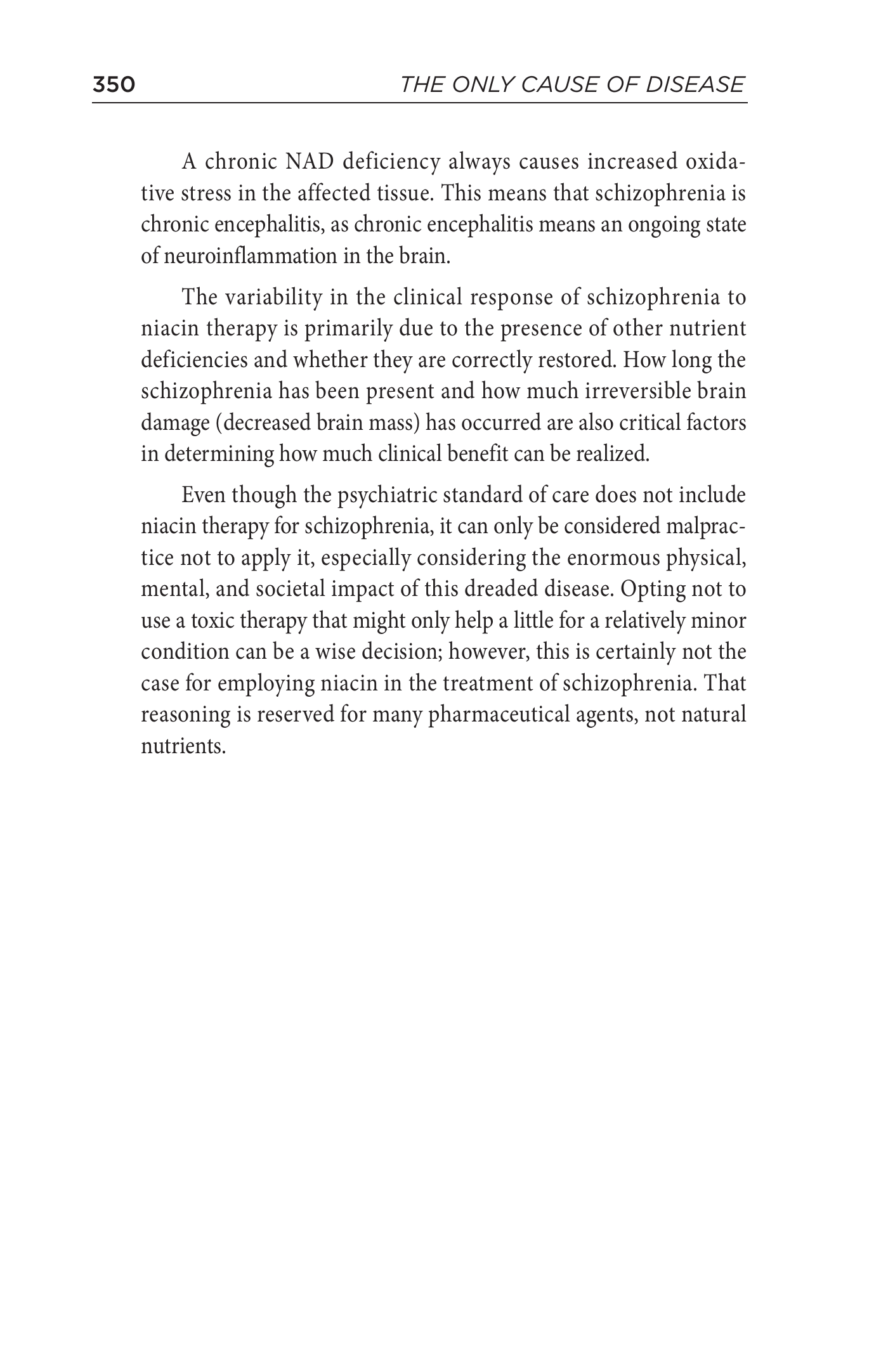
A chronic NAD deficiency always causes increased oxida- tive stress in the affected tissue. This means that schizophrenia is chronic encephalitis, as chronic encephalitis means an ongoing state of neuroinflammation in the brain. The variability in the clinical response of schizophrenia to niacin therapy is primarily due to the presence of other nutrient deficiencies and whether they are correctly restored. How long the schizophrenia has been present and how much irreversible brain damage (decreased brain mass) has occurred are also critical factors in determining how much clinical benefit can be realized. Even though the psychiatric standard of care does not include niacin therapy for schizophrenia, it can only be considered malprac- tice not to apply it, especially considering the enormous physical, mental, and societal impact of this dreaded disease. Opting not to use a toxic therapy that might only help a little for a relatively minor condition can be a wise decision; however, this is certainly not the case for employing niacin in the treatment of schizophrenia. That reasoning is reserved for many pharmaceutical agents, not natural nutrients.


Book introduction and complete contents · Previous section · Next section · Previous part