The Only Cause of Disease: Healing by Reversing Pathology — Chapter 12 — Vitamin C: The Premier Antioxidant

Chapter 12 — Vitamin C: The Premier Antioxidant

The Only Cause of Disease: Healing by Reversing Pathology — Thomas E. Levy, MD, JD

Part 1 of 6; physical source pages 275–280.

Book introduction and complete contents · Previous section · Next section · Next part

Editorial notice — separate from the source: This is a faithful reproduction of the author’s published source, not an I-OM clinical guideline or endorsement of every claim. It is educational material, not individualized medical advice. The source’s original disclaimers and copyright notices are retained. Safety note: Do not use this reproduction as instructions for self-treatment. Hydrogen peroxide mist can irritate the respiratory tract; higher exposures can cause serious lung injury. See CDC/ATSDR safety guidance.

Unchanged original PDF


Source page 275

Open original page 275 — full-size image

Chapter 12 No one is more hated than he who speaks the truth. Plato

Vitamin C: The Premier Antioxidant

Supremacy in Restoring Oxidized Biomolecules Vitamin C, until it has been extensively metabolized, is present in the body in its reduced form (AA—ascorbic acid) and its oxidized form (DHAA—dehydroascorbic acid). It is also present in the blood in a one-electron depleted state as the ascorbyl radical, which can give or take another electron depending on the microenvironment in which it is found in the body, effectively serving as a circulating electron buffer in the blood. While nutrient molecules have antioxidant impact in the body and can work to return oxidized biomolecules to their active, reduced state through either direct or indirect mecha- nisms, vitamin C reigns supreme as the most critical antioxidant for sustaining the overall health of the body. Increased oxidative stress, meaning an excess of biomolecules being in a metabolically inactive, oxidized state, is the underlying pathology in all diseases. Working synergistically with the antioxidant matrix throughout 275

Source page 276

Open original page 276 — full-size image
276 THE ONLY CAUSE OF DISEASE

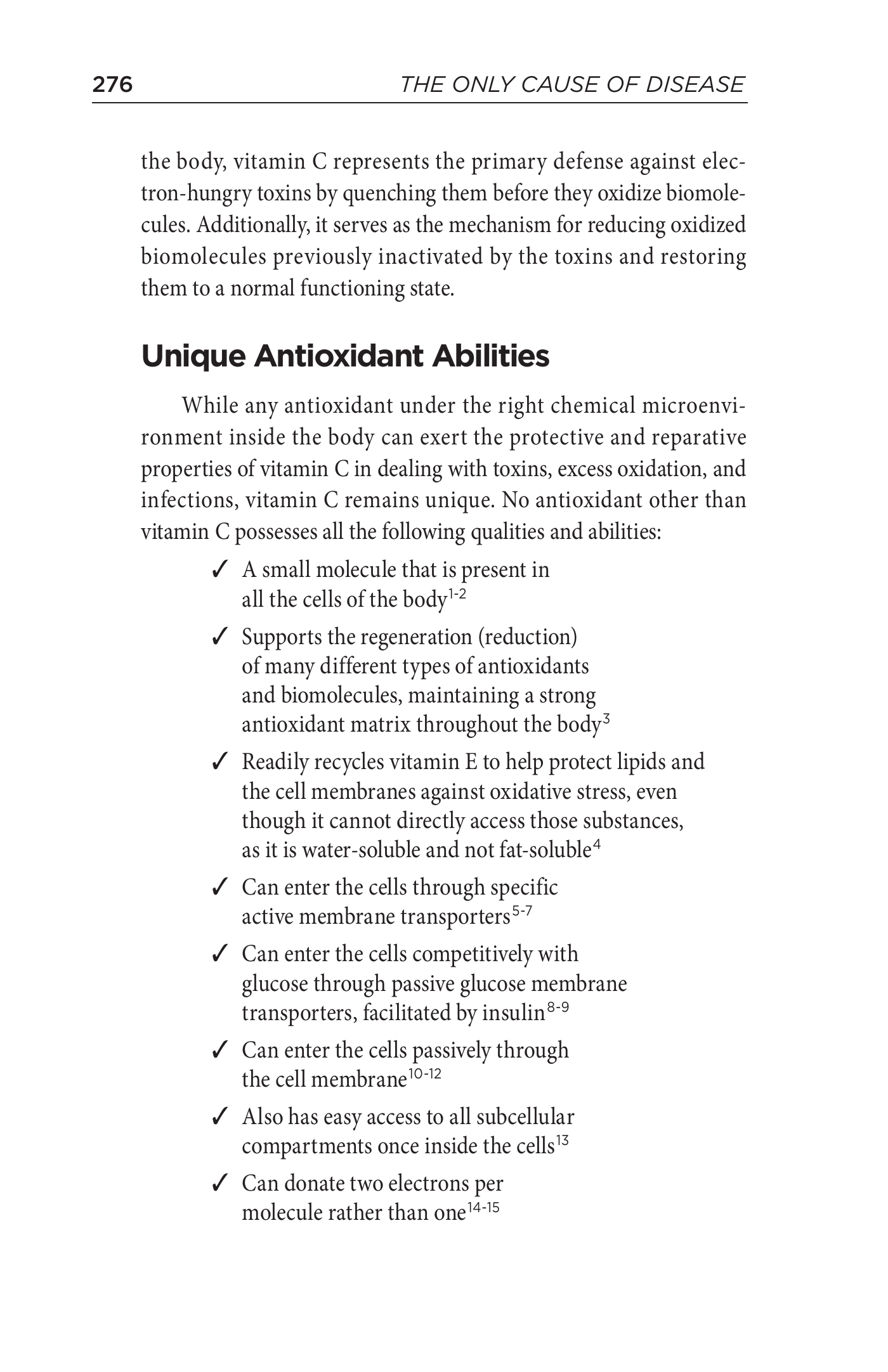
the body, vitamin C represents the primary defense against elec- tron-hungry toxins by quenching them before they oxidize biomole- cules. Additionally, it serves as the mechanism for reducing oxidized biomolecules previously inactivated by the toxins and restoring them to a normal functioning state.

Unique Antioxidant Abilities While any antioxidant under the right chemical microenvi- ronment inside the body can exert the protective and reparative properties of vitamin C in dealing with toxins, excess oxidation, and infections, vitamin C remains unique. No antioxidant other than vitamin C possesses all the following qualities and abilities: ✓ A small molecule that is present in all the cells of the body 1-2 ✓ Supports the regeneration (reduction) of many different types of antioxidants and biomolecules, maintaining a strong antioxidant matrix throughout the body 3 ✓ Readily recycles vitamin E to help protect lipids and the cell membranes against oxidative stress, even though it cannot directly access those substances, as it is water-soluble and not fat-soluble 4 ✓ Can enter the cells through specific active membrane transporters 5-7 ✓ Can enter the cells competitively with glucose through passive glucose membrane transporters, facilitated by insulin 8-9 ✓ Can enter the cells passively through the cell membrane 10-12 ✓ Also has easy access to all subcellular compartments once inside the cells 13 ✓ Can donate two electrons per molecule rather than one 14-15

Source page 277

Open original page 277 — full-size image

Vitamin Introduction C: The Premier Antioxidant 277

✓ Has a stable one-electron-depleted intermediate state (ascorbyl radical), allowing it to be optimally responsive to the immediate reduction or oxidation needs of the microenvironment in which it is found. When ascorbyl radical loses an additional electron, it becomes dehydroascorbic acid (DHAA). 16-17 ✓ When depleted severely enough and long enough, a unique and uniformly fatal deficiency disease develops (scurvy).

Important Historical Context Frederick R. Klenner, MD, was the first person (and physician) to recognize and utilize the significant positive impact of admin- istering vitamin C to patients with a wide range of conditions, particularly for infectious diseases and excessive toxin exposures, or poisonings. Dr. Klenner published 27 papers documenting his clinical results with vitamin C. He asserted that he had never seen a patient who did not benefit from vitamin C. His experiences were so positive that he further stated, “Vitamin C should be given to the patient while the doctors ponder the diagnosis.” 18-19 It was the Hungarian biochemist Albert Szent-Gyorgyi who discovered vitamin C and described the process of oxidation. For this, he was awarded the Nobel Prize in Physiology or Medicine in 1937. 20 However, the “genius” of somehow realizing that this newly discovered vitamin C could be safely given to any patient in large, multigram doses intravenously and orally, while achieving phenom- enal clinical results that had never been seen before with anything else, belongs solely to Dr. Klenner. More specifically, Dr. Klenner documented the ability of vitamin C to reliably cure many different acute infectious diseases for which no other cures have yet been shown to exist by tradi- tional medicine. Furthermore, Dr. Klenner also demonstrated that vitamin C could reliably neutralize any toxin excesses that might be

Source page 278

Open original page 278 — full-size image
278 THE ONLY CAUSE OF DISEASE

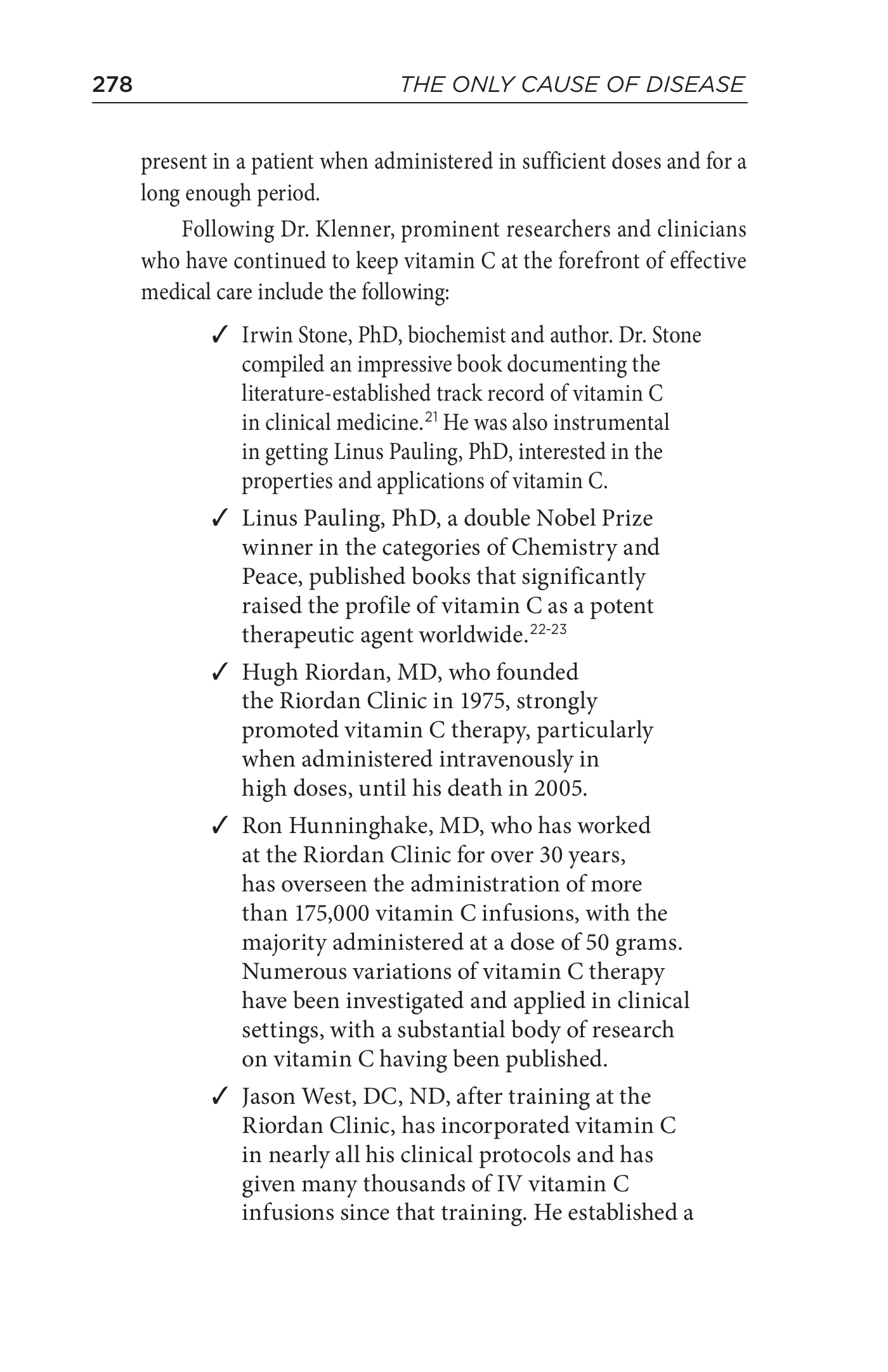
present in a patient when administered in sufficient doses and for a long enough period. Following Dr. Klenner, prominent researchers and clinicians who have continued to keep vitamin C at the forefront of effective medical care include the following: ✓ Irwin Stone, PhD, biochemist and author. Dr. Stone compiled an impressive book documenting the literature-established track record of vitamin C in clinical medicine. 21 He was also instrumental in getting Linus Pauling, PhD, interested in the properties and applications of vitamin C. ✓ Linus Pauling, PhD, a double Nobel Prize winner in the categories of Chemistry and Peace, published books that significantly raised the profile of vitamin C as a potent therapeutic agent worldwide. 22-23 ✓ Hugh Riordan, MD, who founded the Riordan Clinic in 1975, strongly promoted vitamin C therapy, particularly when administered intravenously in high doses, until his death in 2005. ✓ Ron Hunninghake, MD, who has worked at the Riordan Clinic for over 30 years, has overseen the administration of more than 175,000 vitamin C infusions, with the majority administered at a dose of 50 grams. Numerous variations of vitamin C therapy have been investigated and applied in clinical settings, with a substantial body of research on vitamin C having been published. ✓ Jason West, DC, ND, after training at the Riordan Clinic, has incorporated vitamin C in nearly all his clinical protocols and has given many thousands of IV vitamin C infusions since that training. He established a

Source page 279

Open original page 279 — full-size image

Vitamin Introduction C: The Premier Antioxidant 279

highly effective clinical protocol that aims to administer a total of 1,000 grams intravenously over several clinic visits (the million-milligram protocol), yielding excellent clinical results. ✓ Atsuo Yanagisawa, MD, PhD, after training with Dr. Hunninghake, started the administration of vitamin C, especially intravenously, in Japan. Since its inception in 2007, the Japanese College of Intravenous Therapy has had a membership of over 1,000 medical professionals practicing in more than 700 clinics throughout Japan, all of whom focus on the widespread utility of vitamin C in various treatment protocols. Many other healthcare providers around the world have been regularly incorporating vitamin C into their patient treatment protocols for years. Certainly, many other such providers, not named, have nevertheless been major contributors to the promotion and evolution of vitamin C therapy.

Significant Vitamin C Research Findings Anti-Pathogen Vitamin C has been shown to inactivate (“kill”) all viruses in the test tube (in vitro studies) when it has been appropriately applied. Some such examples include the following: ✓ Poliovirus: Vitamin C has been shown to readily inactivate this virus, rendering it completely non-infectious when the treated virus was injected directly into the brains of monkeys. 24 ✓ Herpesviruses 25-26 ✓ Vaccinia viruses 27-28

Source page 280

Open original page 280 — full-size image

280 THE ONLY CAUSE OF DISEASE

✓ Tobacco mosaic virus 29 ✓ Enteroviruses 30 ✓ Influenza virus 31 ✓ Rabies 32 Examples of vitamin C resolving acute viral syndromes in patients (in vivo studies): ✓ Polio, complete cure in 60 out of 60 cases in 3 to 5 days with injected vitamin C 33 ✓ Polio, complete cure in 3 of 5 cases; the other 2 cases with some residual muscle weakness following infection resolution; dosing oral only, with 50,000 to 80,000 mg total being given over a week to 10 days 34 ✓ Another clinician showed that much lower doses of oral vitamin C were still very effective in shortening the time needed to recover from polio infections 35 ✓ Prompt resolution of acute viral hepatitis with oral and/or intravenous administrations of vitamin C 36-40 ✓ Resolution of acute viral encephalitis presenting in a comatose state 41-43 ✓ Measles, simple and complicated ✓ Mumps, simple and complicated 44 ✓ Herpes, chickenpox 45 ✓ Rabies (no human studies); guinea pigs showed improved survival with vitamin C 46 ✓ Examples of vitamin C efficacy in non-viral infections: ✓ Diphtheria, tetanus, staphylococcus, streptococcus, and pseudomonas, all documented as curable


Book introduction and complete contents · Previous section · Next section · Next part

Chapter 12 — Vitamin C: The Premier Antioxidant

The Only Cause of Disease: Healing by Reversing Pathology — Thomas E. Levy, MD, JD

Part 2 of 6; physical source pages 281–286.

Book introduction and complete contents · Previous section · Next section · Previous part · Next part

Unchanged original PDF


Source page 281

Open original page 281 — full-size image

Vitamin Introduction C: The Premier Antioxidant 281

✓ Rheumatic fever is reliably cured. 47 ✓ Vitamin C is very effective in supporting the resolution of malaria, leprosy, typhoid fever, brucellosis, trichinosis, dysentery (both amebic and bacillary), and trypanosomal infections, such as Chagas’ disease. While vitamin C is an absolute virucide, it also often kills pathogenic bacteria (bactericidal) and nearly always stops their growth (bacteriostatic). Furthermore, vitamin C is essential for a robust and optimally competent immune system. 48 Vitamin C has also been shown to be of clear benefit, some- times resulting in a complete clinical resolution in the following conditions: ✓ Lyme disease, AIDS, and HIV+ syndromes, chronic hepatitis, persistent spike protein syndrome—these conditions appear to feature “embedded” pathogens that are not easily accessible, as they would be in the circulating blood. ✓ Common cold—while vitamin C always alleviates cold-related symptoms and pathology, a very high amount of vitamin C is needed to neutralize the very high virus titers seen in this condition. ✓ Tuberculosis—although clinical responses are slow due to the growth rate of the involved pathogen, a large body of literature documents the benefits of vitamin C in treating this infection. Due to the pro-oxidant nature of toxins and the antioxidant properties of vitamin C, vitamin C has been documented as the ultimate nonspecific antidote to toxins, both in vitro and in vivo, in animals and humans. Examples of toxic agents neutralized by vitamin C are listed in Chapter 1.

Source page 282

Open original page 282 — full-size image

282 THE ONLY CAUSE OF DISEASE

Radiation toxicity also inflicts its damage by depleting vital biomolecules of electrons, leaving them in a metabolically nonfunc- tional, oxidized state. Vitamin C has been shown to reduce radia- tion-induced tissue damage as well as to decrease mortality when otherwise fatal doses of radiation have been administered. The radi- ation can come in the form of the intake of radioactive elements or just the exposure to high enough doses of gamma radiation. 49-55 In Japan, after the tsunami-induced breach of the Fukushima Daiichi nuclear power plant in 2011, the Japanese College of Intravenous Therapy (JCIT) treated exposed individuals with vitamin C-centered therapies. In an unpublished study, five Fukushima nuclear plant workers with heavy radiation exposure received intravenous vitamin C twice a month, in addition to regular supple- Due to the mentation with oral liposome-encap- pro-oxidant nature sulated vitamin C, alpha-lipoic acid, of toxins and selenium, and a multivitamin prepa- ration. Over a two-month treatment the antioxidant period, statistically significant drops properties were seen in laboratory testing for free of vitamin C, DNA (a measure of radiation damage), vitamin C has been as well as in a multifactorial Cancer Risk documented as the Score evaluation. ultimate nonspecific antidote to toxins, Antitoxin both in vitro and As vitamin C can both quench in vivo, in animals pro-oxidant toxins directly through and humans. electron donation (reduction) and/ or repair the oxidative damage already inflicted by a toxin exposure, it is also the ideal agent for dealing with acute, subacute, and chronic toxin exposures, including drug overdoses and accidental or intentional poisonings. Combined with its anti-pathogen properties, vitamin C

Source page 283

Open original page 283 — full-size image

Vitamin Introduction C: The Premier Antioxidant 283

therapy should be an essential part of any treatment for infections or infectious diseases, as the toxins they generate are what causes the damage, or what eventually kills, the host. Furthermore, the toxin exposure induces a bodywide vitamin C depletion which needs to be addressed. While vitamin C is an absolute virucide, Clinical Application it also often kills Factors pathogenic bacteria The goal of any clinical protocol (bactericidal) treating any condition should always and nearly always include measures designed to optimize stops their growth intracellular (cytoplasmic) levels of (bacteriostatic). vitamin C. When any cell in the body has optimal levels of vitamin C in it, it is physiologically normal, and no excess oxidation is present any longer among the cellular biomolecules. Generally, when cells are normal, the extracellular spaces are also normal, with a normal balance of reduction and oxidation. Multiple factors can influence the clinical impact of vitamin C administration in patients. These factors include the following: ✓ Dose ✓ Route of administration ✓ The rate of administration when given intravenously ✓ Frequency of administration ✓ Duration of the administration protocol ✓ Form of vitamin C ✓ Synergistic therapies, such as hydrocortisone, or other bio-oxidative therapies such as hydrogen peroxide, ozone, ultraviolet

Source page 284

Open original page 284 — full-size image

284 THE ONLY CAUSE OF DISEASE

light blood irradiation applications, and Hyperbaric oxygen therapy (HBOT)

Dose As the saying goes in real estate, the three most important factors are “location, location, and location.” Similarly, with vitamin C therapy, the three most important factors are “dose, dose, and dose.” Small doses can have an inconsequential clinical impact, while larger doses can be curative, especially in treating infections. The literature abounds with vitamin C studies that use 500 mg orally or less daily, and then “conclude” that vitamin C was of no benefit for the infection, toxin, or disease being studied. Most adults will benefit significantly from 50-gram infusions of vitamin C for most conditions. However, for larger bodies, infusions of 75 to 150 grams of vitamin C can be indicated for an optimal response.

Route of Administration Vitamin C can be given intravenously, intramuscularly, orally (regular forms or liposome-encapsulated), rectally, by nebulization, and topically on the eyes or in the ears, and both on the skin as well as through it (transdermally). Delicate areas, such as on the eyes or in the respiratory tract, are best treated with pH-neutral vitamin C solutions (as sodium ascorbate or properly buffered ascorbic acid). Rectal administrations can be applied, but are not generally neces- sary since any inflammatory conditions of the intestine or colon can be effectively treated with oral vitamin C at or exceeding bowel tolerance. Rarely, a retention enema can be used to administer addi- tional vitamin C to the body. When regular (not liposome-encapsulated) vitamin C is being administered, the intravenous route is always the most desirable (as sodium ascorbate or buffered ascorbic acid, especially when augmented by hydrocortisone). However, intramuscular admin-

Source page 285

Open original page 285 — full-size image

Vitamin Introduction C: The Premier Antioxidant 285

istration can be very effective and can be the preferred method for babies or toddlers when the intravenous route is not easily accomplished. This intramuscular route was directly addressed by Dr. Klenner:

“In small patients, where veins are at a premium, ascorbic acid can easily be given intramuscularly in amounts up to two grams at one site. Several areas can be used with each dose given. Applying ice to the gluteal muscles until they turn red almost eliminates the pain. We always reapply the ice for a few minutes after the injection is administered. Ascorbic acid is also given, by mouth, as follow-up treatment.” 56 [Dr. Klenner would typically give his ascorbic acid buff- ered to a more neutral pH with sodium bicarbonate.]

Vitamin C can be taken orally in any of several ascorbate forms (hydrogen [ascorbic acid], sodium, magnesium, potassium, calcium, manganese, zinc, molybdenum, and chromium). The most common forms are ascorbic acid and sodium ascorbate. Calcium is often used as a “buffered” form of vitamin C that is easy on the stomach, although sodium ascorbate achieves the same goal. Discussed elsewhere (see Chapter 3), however, is the fact that supplemental calcium needs to be avoided as it is a major player in provoking and sustaining increased intracellular oxidative stress in the cells throughout the body. The other forms work well, but unnecessarily increase the cost of the vitamin C bill. Also, to take the recom- mended daily multigram doses of vitamin C, the other forms could end up supplying toxic levels of the associated mineral (except for the magnesium ascorbate). Vitamin C can also be taken in a liposome-encapsu- lated form. Although such a form is administered orally, it is capable of raising intracellular levels of vitamin C even more effectively than regular, unencapsulated vitamin C adminis-

Source page 286

Open original page 286 — full-size image

286 THE ONLY CAUSE OF DISEASE

tered intravenously. Some key features of liposome-encapsu- lated agents, including vitamin C, include the following: ✓ Rapid and nearly complete absorption orally 57 ✓ Delivery to the intestinal lymphatics 58-62 ✓ Protection of the encapsulated agent from gastrointestinal degradation 63 ✓ Prevention of stomach sensitivity to the agent ✓ Intracellular bioavailability 64-67 ✓ Energy-sparing intracellular delivery of the encapsulated agent. The active transport of unencapsulated vitamin C across cell membranes requires energy consumption. 68-73 Additional benefits of liposome-encapsulated supplementation due to its phosphatidylcholine content: ✓ Antioxidant impact 74-76 ✓ Anti-atherosclerotic impact 77 ✓ Cholesterol lowering 78 ✓ Alleviation of fatty liver and obesity 79-80 ✓ Protection against ischemic injury 81 ✓ Cell membrane repair 82

Rate of Administration Vitamin C can be administered rapidly via IV push or as a several-hour infusion. Important factors that determine the rate of administration include the following: ✓ The clinical stability of the patient ✓ Whether the condition is localized or systemic ✓ Whether the condition is an infectious disease (which also involves toxins)


Book introduction and complete contents · Previous section · Next section · Previous part · Next part

Chapter 12 — Vitamin C: The Premier Antioxidant

The Only Cause of Disease: Healing by Reversing Pathology — Thomas E. Levy, MD, JD

Part 3 of 6; physical source pages 287–292.

Book introduction and complete contents · Previous section · Next section · Previous part · Next part

Unchanged original PDF


Source page 287

Open original page 287 — full-size image

Vitamin Introduction C: The Premier Antioxidant 287

✓ Whether the condition is purely a toxin exposure ✓ Whether the condition is acute or chronic ✓ Comfort of the infusion; infusion pain should never be present Imminently life-threatening situations may require a rapid infusion of vitamin C (such as 50 grams in 20 to 30 minutes) or even a more rapid administration by an IV push (several grams in a minute or two). Dr. Klenner reported the following dramatic case history supporting the value of IV push vitamin C:

“An adult male came to my office complaining of severe chest pain and the inability to take a deep breath. Stated that he had been ‘stung’ or ‘bit- ten’ 10 minutes earlier. Thinking that it was Black Widow and not bothering to look for fang marks, due to the gravity of the situation, I gave one gram of calcium gluconate intravenously. This gave no relief. He begged for help, saying he was dying. He was becoming cyanotic. Twelve grams of vi- tamin C were quickly drawn into a 50 cc syringe and, with a 20-gauge needle, administered intrave- nously as fast as the plunger could be pushed. Even before the injection was completed, he exclaimed, ‘Thank God.’ The poison had been neutralized that ­rapidly.­” ­[emphasis mine] 83

The toxin was later identified at Duke University to be the venom of the Puss Caterpillar, a very toxic and large insect resem- bling a small mouse-like animal. 84 The chemical structure of vitamin C also results in a unique reaction when administered rapidly and in sufficiently large doses intravenously. Glucose is the substrate used by animals (and man in the past before acquiring an epigenetic defect) to produce vitamin C

Source page 288

Open original page 288 — full-size image

288 THE ONLY CAUSE OF DISEASE

in their livers. Due to this, vitamin C is structurally very similar to glucose. And because of this close similarity, the pancreas “views” vitamin C in the blood as though it were glucose. This results in the pancreas reflexively releasing substantial amounts of insulin to deal with what it From a physiological perceives as a considerable amount of perspective, glucose. Additionally, many glucome- this response to ters misread circulating vitamin C as vitamin C can be glucose, just as the pancreas does, and individuals with diabetes can inad- regarded as an vertently administer excessive doses endogenously of insulin after receiving intravenous induced form of IPT. vitamin C because of a falsely high glucose reading on the glucometer, resulting in symptomatic hypoglycemia in such individuals. Insulin potentiation therapy (IPT) is a treatment protocol designed to increase cell permeability and enhance the uptake of extracellular agents into the cytoplasm of body cells by inducing hypoglycemia through the administration of insulin injections. 85 IPT has been primarily utilized clinically to treat cancer patients with much lower, and accordingly less systemically toxic, doses of chemotherapy. Insulin has long been recognized for its ability to increase cellular uptake of various agents, although the precise mechanisms underlying this effect have not been fully estab- lished. 86-92 Insulin has also been established to increase the permea- bility of the blood-brain barrier. 93-94 Multigram doses of vitamin C given rapidly enough will induce a release of insulin and a subsequent significant drop in glucose, along with the symptoms of hypoglycemia virtually iden- tical to those caused by a direct insulin injection. From a physi- ological perspective, this response to vitamin C can be regarded as an endogenously induced form of IPT. The major difference is

Source page 289

Open original page 289 — full-size image

Vitamin Introduction C: The Premier Antioxidant 289

that a large amount of vitamin C is also present in the circulation and is available for delivery into cells as glucose levels drop. This should only prove to be of additional benefit compared to “regular” IPT since vitamin C is an effective anti-cancer agent by itself. 95 Increased cellular vitamin C also increases cellular ATP formation. The effect that vitamin C has on the pancreatic release of insulin also offers additional potential benefits. Since insulin has been shown to improve the intracellular delivery of various agents, taking nutrient supplements orally approximately one hour before the rapid infusion of vitamin C may significantly enhance their cellular concentrations.

Frequency of Administration Administering vitamin C more frequently ensures a more persistent presence of the vitamin C in the blood and body than if it is given only once a day, as normal kidney function quickly filters out a substantial portion of the dose. This is especially important when treating critically ill patients with infectious conditions, such as sepsis and septic shock. Administering 50 grams as a one-time daily infusion will generally have a less dramatic effect in treating such patients than administering 25 grams every six hours (same total dose) over 24 hours. However, for patients with cancer or other chronic degenerative diseases, the exceptionally high blood levels that can be reached temporarily with a one-infusion approach might be preferable. To date, few hospitals around the world permit the infusion of vitamin C, which limits the clinician to an administration schedule within the operating hours of the outpatient clinic being used, unless the patient is already “out of reach” due to hospital- ization. Regardless, the ultimate guide to administering vitamin C to acutely ill patients is the judgment of the treating clinician. With acute infectious diseases, Dr. Klenner would always initiate

Source page 290

Open original page 290 — full-size image

290 THE ONLY CAUSE OF DISEASE

treatment with a high dose of vitamin C. If a significant positive clinical response was not observed within a few hours, the dose would be repeated. However, substantial improvement often occurs, and lower dosing can then be administered less frequently until complete recovery is achieved.

Duration of Administration The duration of a vitamin C administration protocol needs to be long enough to allow for complete eradication (infection) and/or neutralization (toxin) of the disease or infection being treated. For severe and life-threatening infectious diseases, vitamin C should be continued at relatively high and frequent doses for at least 24 to 48 hours after it appears that clinical normalcy has been restored. When a positive response is followed by too quick an attenuation or cessa- tion of vitamin C, a complete clinical relapse is possible. This is anal- ogous to the standard way in which antibiotics are prescribed: “Even if you feel well, take the full 10- to 14-day prescription.”

Form of Vitamin C The active part of any vitamin C formulation is the anion, or ascorbate. Ascorbate can be accompanied by any of several cations, including hydrogen, sodium, calcium, potassium, magnesium, or a few other minerals. These forms all deliver vitamin C, but their relative impact and toxicity can vary widely depending on the cation attached to the ascorbate anion. The best and most common forms of vitamin C are ascorbic acid (hydrogen ascorbate) and sodium ascorbate. The main downside of ascorbic acid is an upset stomach for a few sensitive individuals. Sodium ascorbate does not upset the stomach, and the fears that the sodium content of this form can aggravate hyperten- sion or congestive heart failure are unwarranted, as only sodium accompanied by chloride appears to have this effect. 96-97

Source page 291

Open original page 291 — full-size image

Vitamin Introduction C: The Premier Antioxidant 291

Calcium ascorbate is marketed as “buffered” vitamin C, and it causes no stomach upset. However, supplemental doses of calcium should be avoided entirely, as excess calcium has a wide range of adverse effects, including an increase in all-cause mortality. 98 The duration The mineral ascorbates are good of a vitamin C supplements, but to obtain a thera- administration peutic daily dose of vitamin C, the protocol needs to supplemented mineral could reach toxic be long enough to levels. An exception to this is magne- allow for complete sium ascorbate, an excellent supplement supplying two vital nutrients. However, eradication taking magnesium and vitamin C sepa- (infection) and/ rately would be more economical to or neutralization achieve the optimal amounts of both on (toxin) of the a daily basis. disease or infection Several supplements are marketed being treated. today as “natural vitamin C” or “vitamin C complex.” Several of these companies even go so far as to say ascorbic acid (or any form of ascorbate) is not vitamin C. While such an assertion is so outlandish as to be absurd, it causes many consumers to have unnecessary doubts about the benefits of their chosen vitamin C supplement. The literature contains tens of thou- sands of articles establishing the numerous benefits of vitamin C, also known as ascorbic acid or sodium ascorbate. In addition to trying to convince the public that ascorbic acid is not vitamin C, some supplement companies also want the consumer to think that ascorbic acid is of relatively little use or benefit in the body if it is not ingested in a “natural” form. It is also asserted that many of the vitamin C supplements sold are synthetic and not directly derived from natural sources. But properly purified, vitamin C is vitamin C, regardless of its source or how it was produced.

Source page 292

Open original page 292 — full-size image

292 THE ONLY CAUSE OF DISEASE

The “natural” or “vitamin C complex” supplements are derived from plant sources, and they also contain other antioxidants, such as bioflavonoids. Such supplements are good products, as the more antioxidants the patient ingests, ...studies have shown the better. However, such multi-ingre- dient products end up being unnec- that vitamin C can essarily expensive to the consumer not only enhance the seeking optimal value for their money. anti-cancer effects To receive the optimal recommended of chemotherapy amounts of vitamin C, such supple- but also mitigate its ments can be quite costly. Nevertheless, negative impact on many patients who have never supple- normal cells. mented before will find that they feel substantially better on even relatively small amounts of vitamin C, regard- less of the source or the type of vitamin C-containing supplement being taken. Buyer beware. While the internet is invaluable in delivering information, many charlatans utilize the same platform to defraud potential customers. As such, the discerning healthcare consumer must evaluate what is beneficial, what is harmful, and what is merely inconsequential. The individual needs to double-check and triple-check information on other websites and information sources to help establish the truth.

Vitamin C and Synergistic Therapies Because it is a powerful antioxidant that is well-distributed throughout the body, vitamin C can enhance the effectiveness of nearly all other therapeutic agents and interventions. For infections, vitamin C also works well with most antibiotic regimens that the clinician might prescribe.


Book introduction and complete contents · Previous section · Next section · Previous part · Next part

Chapter 12 — Vitamin C: The Premier Antioxidant

The Only Cause of Disease: Healing by Reversing Pathology — Thomas E. Levy, MD, JD

Part 4 of 6; physical source pages 293–298.

Book introduction and complete contents · Previous section · Next section · Previous part · Next part

Unchanged original PDF


Source page 293

Open original page 293 — full-size image

Vitamin Introduction C: The Premier Antioxidant 293

With the application of ozone, which initially exerts a pro-ox- idant effect on pathogens in the blood and tissues, vitamin C is well-suited for administration following such treatments. Generally, vitamin C should not be used simultaneously with a pro-oxidant agent, as the oxidizing effect of such an agent is initially desirable in a given situation, and vitamin C could neutralize it before it has had sufficient impact. Chemotherapeutic agents, which are nearly all pro-oxidant and toxic, can be neutralized to a degree when given simultaneously with vitamin C. If the maximal oxidizing impact of the chemo- therapy is desired, then it should not be in the bloodstream at the same time as the vitamin C. However, no significant delay is needed to follow chemotherapy with vitamin C, as it works very well in repairing the damage done to the normal, non-cancerous tissues. A similar protection from vitamin C, which shields normal cells from the toxicity of chemotherapy, can also be achieved if it is adminis- tered before chemotherapy. Consistent with these concepts, studies have shown that vitamin C can not only enhance the anti-cancer effects of chemotherapy but also mitigate its negative impact on normal cells. 99-102

Multi-C Protocol There is no one optimal way to administer vitamin C to a given patient. As the most critical factor in vitamin C therapy is the dose, it follows that a patient does best when vitamin C levels inside the body’s cells are eventually optimized. While there is no single set way to best achieve this goal, administering two or more forms of vitamin C can be more effective than pushing a single form of administration to its maximum degree. The Multi-C Protocol is a valuable guide for determining the best ways to optimize vitamin C levels in patients undergoing treatment. This protocol can utilize vitamin C administration in any of the following ways:

Source page 294

Open original page 294 — full-size image

294 THE ONLY CAUSE OF DISEASE

✓ Oral liposome-encapsulated vitamin C, which works to optimize the intracellular delivery of vitamin C, as well as delivery to subcellular organelles, like the mitochondria ✓ Oral ascorbic acid or sodium ascorbate powder, taken in multigram doses several times daily, up to or reaching bowel tolerance. This minimizes exposure to gut-generated toxins, helps load the numerous immune cells in the gut with vitamin C, and supports the extracellular delivery of vitamin C. 103-104 ✓ Oral administration of ascorbyl palmitate, a fat-soluble form of vitamin C, improves antioxidant status in fatty tissue and nervous system tissues, including the cell walls. 105-108 ✓ Intravenous administration of vitamin C is available as IV push, rapid infusions, and prolonged infusions. This optimizes toxin neutralization in the extracellular areas of the body before most of the vitamin C is eventually taken into the cells. The periodic addition of IV vitamin C pushes can also enhance extended infusions of vitamin C, further increasing circulating vitamin C levels in the blood. In a hospitalized situation, if permitted, 24-hour infusions of vitamin C can also be administered. Adding insulin, hydrocortisone, and/or magnesium will substantially augment the intracellular delivery of vitamin C. ✓ Intramuscular administration of vitamin C is utilized when IV is not easily achieved, as in the very young. ✓ Hydroxytyrosol (significantly present in olive leaf extract) supplementation helps overcome the epigenetic defect in the human liver that blocks the internal synthesis of vitamin C. 109

Source page 295

Open original page 295 — full-size image

Vitamin Introduction C: The Premier Antioxidant 295

✓ Metadichol® is a dietary supplement described as a nano lipid formulation of policosanol. A 5 mg daily dose has been reported to increase vitamin C levels between 3- and 12-fold. The impact of policosanol supplementation on vitamin C levels in its regular form is not yet known. Metadichol® has also been reported to have a potent antiviral impact in vivo. In mouse fat cells, it has been reported to increase the expression of the GULO gene in the liver 4-fold. 110-114

Mop-Up IVC Some individuals, especially those with more severe conditions, such as acute and chronic infections, as well as substantial toxin accumulations in their bodies, may begin to feel unwell late during an infusion of vitamin C. While it is much more typical to gener- ally feel better as the infusion proceeds, a few individuals may feel worse as an increased toxin presence appears in the bloodstream. This response to the infusion has been referred to as a Herxheimer reaction, or a Herxheimer-like reaction. Over 100 years ago, syphilis patients given an effective anti-pathogen would often get quite ill when the pathogens would die off and leave behind toxic metabo- lites in the blood. This phenomenon was described by two derma- tologists, Karl Herxheimer and Adolf Jarisch. With IVC, a similar reaction can occur, but it is not severe, as vitamin C is the most direct way to deal with the presence of new toxins in the blood. The common clinical situations for the Herxheimer reaction to occur late in an IVC or immediately following it are: ✓ Massive kill-off of pathogens: This occurs when an infection is susceptible to the anti- pathogen effects of vitamin C, resulting in a rapid kill-off of the pathogens. As a consequence, a relatively large amount of toxic pathogen-related debris appears

Source page 296

Open original page 296 — full-size image

296 THE ONLY CAUSE OF DISEASE

in the blood, along with highly toxic free iron contained within such pathogens. This reaction is very similar to the circumstances present when syphilis was being effectively treated, as noted above. ✓ Accelerated release of stored intracellular toxins: Some patients, particularly older individuals, have accumulated large stores of toxins within their cells. Such cells exhibit significantly increased intracellular oxidative stress, accompanied by a substantial reduction in their detoxification abilities, as many of the detoxification enzymes are in an inactive, oxidized state. When a high enough dose of vitamin C can enter these cells in a relatively short period, these detox enzymes are reactivated (reduced) and begin releasing the stored toxins from the cells into the blood and lymphatic circulation. When these toxins are being released from these cells in large enough amounts, the new incoming vitamin C cannot neutralize them rapidly enough to keep the patient symptom-free. ✓ Massive kill-off of susceptible cancer cells: Cancer patients can also have a clinical response to IVC very analogous to that of an infection, as noted above. Some types of cancer are much more susceptible to vitamin C treatment than others, and some cancers have a much larger mass of cancer cells than others. When the cancer is highly sensitive to IVC and has a large mass, a Herxheimer-like reaction can occur as a result of the large-scale killing of cancer cells, releasing substantial amounts of uric acid, phosphate, and potassium. 115 Additionally, as with infections, cancer cells

Source page 297

Open original page 297 — full-size image

Vitamin Introduction C: The Premier Antioxidant 297

contain large amounts of free iron that are also released when they die. Of note, many cancer patients have infections as well, which would further add to the degree of the Herxheimer response as both pathogens and cancer cells are killed and broken apart. The Mop-Up vitamin C infusion is paradoxical on its face. The same agent that causes the detoxification problem is utilized to resolve it. The “trick” is in the amount of vitamin C that is infused and the rate at which it is infused. Vitamin C is the ultimate anti- toxin; however, when it is administered too rapidly in large doses, especially to the patient groups described above, a significant outpouring of toxins can result, exceeding the neutralization capacity of the newly administered vitamin C. Another benefit The Mop-Up vitamin C principle is of Mop-Up “Low & Slow.” When the Mop-Up phase vitamin C is that it becomes necessary, vitamin C, administered allows healthcare at a much lower dose and more slowly, will practitioners to administer higher proceed to neutralize the circulating toxins vitamin C doses while having little to no impact on releasing than might have additional toxins from the cells. Determining been possible the optimal amount of vitamin C required otherwise, which and the rate at which it should be adminis- is a generally tered ultimately becomes a clinical decision. desirable goal for Sometimes, simply slowing the infusion rate most patients. by 75% or so, when 25% to 50% of the IV fluid remains, is enough to have the patient feeling well by the end of the infusion period. When the patient feels poorly and the primary IV is almost complete, just infusing five more grams over an hour or so can satisfactorily resolve the detox reaction.

Source page 298

Open original page 298 — full-size image

298 THE ONLY CAUSE OF DISEASE

Another benefit of Mop-Up vitamin C is that it allows health- care practitioners to administer higher vitamin C doses than might have been possible otherwise, which is a generally desirable goal for most patients. As long as a patient feels good by the time they leave the office, they will typically be happy to return for more treat- ment in the future, even if they were somewhat symptomatic toward the end of the initial infusion. Additionally, repeated infusions are expected to have a significantly lower chance of a detox reaction, as toxin levels in the body decrease over time.

Vitamin C’s Incredible Safety Virtually all therapeutic agents can be pushed to a toxic degree of intake. Because the amounts needed to reach toxicity can some- times be ludicrously high, most natural agents, nutrients, vitamins, and minerals can be regarded as having no significant toxicity concerns, especially when taken as recommended. Even excessive water intake can be fatal. 116-118 However, most prescription drugs have far lower thresholds to reach a toxic intake, with many deaths occurring even when such drugs are taken precisely as prescribed. Vitamin C has never been shown to have a defined toxicity in humans. In rats, the median lethal dose (LD50) of vitamin C is approximately 11,900 mg/kg when administered orally. This represents an oral intake of greater than 800 grams in a 70 kg person, a dose that could never really be reached by anyone due to bowel intolerance. This lack of toxicity is underscored by the fact that the highest blood levels of vitamin C are associated with the lowest mortality from heart disease and cancer, in particular, as well as mortality from all causes. In 19,496 men and women, vitamin C levels in the top 20% of this group were associated with half the risk of dying compared to those individuals with vitamin C levels in the bottom 20%. 119-120 The experience at the Riordan Clinic in Wichita, Kansas, strongly supports the unique safety of vitamin C. Over the past 33


Book introduction and complete contents · Previous section · Next section · Previous part · Next part

Chapter 12 — Vitamin C: The Premier Antioxidant

The Only Cause of Disease: Healing by Reversing Pathology — Thomas E. Levy, MD, JD

Part 5 of 6; physical source pages 299–304.

Book introduction and complete contents · Previous section · Next section · Previous part · Next part

Unchanged original PDF


Source page 299

Open original page 299 — full-size image

Vitamin Introduction C: The Premier Antioxidant 299

years, over 175,000 intravenous infusions of vitamin C have been administered at the Riordan facilities. Doses have varied from 7.5 grams (as a slow IV push) to 250 grams daily, with 50 grams being the most common dose admin- istered. NO significant adverse side effects were seen. Furthermore, many This lack of toxicity of the patients were not “well” patients is underscored looking for a vitamin boost. Rather, by the fact that many had chronic degenerative diseases, the highest blood including cancer, and would be expected levels of vitamin C to be more prone to side effects from are associated any treatment they might receive. In with the lowest 24 terminal cancer patients, contin- mortality from heart uous infusions of vitamin C at approx- disease and cancer, imately 50 grams per day for eight in particular, as weeks resulted in no definable adverse well as mortality side effects. However, one patient with a from all causes. previous history of kidney stones devel- oped a stone. 121-122 Also from the Riordan Clinic, it was reported more specifi- cally that “…194,054 grams, or 427 pounds of IV vitamin C” were “administered to 275 patients with no sign of kidney disease, or any other significant side effects over 16 years.” 123 In Australia, it was reported that many (roughly 100) physicians had given as much as 300 grams of vitamin C intravenously to their patients without any significant side effects and often spectacular clinical results. 124 A sizable number of integrative medicine practitioners appre- ciate the therapeutic value of IVC but continue to be unnecessarily wary of 50- to 100-gram infusions of vitamin C (or even higher doses). This unnecessary caution too often results in a total daily dose of 25 grams or less that can sometimes prove to be insufficient to save a patient with severe and widespread oxidative stress and damage secondary to an advanced infection or other medical condi-

Source page 300

Open original page 300 — full-size image

300 THE ONLY CAUSE OF DISEASE

tion. Nevertheless, even such lower doses can still often be very effective, and even curative, just not as reliably so. As the efficacy and safety of vitamin C have been increasingly witnessed and docu- mented during the COVID pandemic, the medical propaganda seeking to discredit the value of this agent has only increased, and the myth of “vitamin C toxicity” continues to be pushed.

Vitamin C and Kidney Stones The most persistent myth about high doses of vitamin C is that it precipitates kidney stones. Most kidney stones are composed of calcium oxalate. As such, it should become immediately apparent that an elevated presence of calcium, as well as oxalate, will be needed to result in the formation of most stones. However, while the presence of increased oxalates from vitamin C in the urine does not reliably cause kidney stones, it is one of multiple risk factors. At least 60 other risk factors for increased urinary oxalate have been identified. 125 In the large-scale Harvard Prospective Health Professional Follow-Up Study, individuals with the highest daily vitamin C intake (in the top 20%) had a lower risk of kidney stones compared to those with the lowest intake (in the bottom 20%). 126 In over 10,000 patients, where serum vitamin C levels were examined to correlate with the presence of kidney stones, higher levels of vitamin C were not found to increase the prevalence of kidney stones. In fact, among men, a 1 mg/dL increase in serum ascorbic acid was independently associated with a nearly 30% decrease in the prevalence of kidney stones. 127 Conversely, in examining a large population of men who had already developed kidney stones, no association was found between the intake of vitamin C and stone formation. 128 A similar study in women reached the same conclusions. 129 In a guinea pig study (an animal that does not produce vitamin C), it was demonstrated that the administration of vitamin C alone did not induce the production of calcium crystals

Source page 301

Open original page 301 — full-size image

Vitamin Introduction C: The Premier Antioxidant 301

or stone formation. However, when vitamin C administration was preceded by 45 days of feeding the animal calcium carbonate and an additional source of oxalate (sodium oxalate), which resulted in elevated levels of both calcium and oxalate in the urine, calcifications In the large-scale occurred. 130 Harvard Prospective Other factors are involved in Health Professional calcium oxalate kidney stone forma- Follow-Up Study, tion aside from elevated calcium and individuals with oxalate levels in the urine. While the highest daily someone can develop a kidney stone vitamin C intake (in during or following a vitamin C the top 20%) had a infusion, it is nevertheless extremely rare. It should not be a deterrent to lower risk of kidney giving vitamin C when it is clinically stones compared indicated. Pregnancy is not an estab- to those with the lished risk factor for kidney stones in lowest intake (in normal women; however, it substan- the bottom 20%). tially increases the amount of calcium and oxalate excreted in the urine, both of which are individual risk factors for stone production. 131 While oxalate is a terminal breakdown product of vitamin C, there are additional stages of breakdown leading up to that:132 ✓ Ascorbic acid (AA) to dehydroascorbic acid (DHAA) ✓ DHAA to diketoglutaric acid ✓ Diketoglulonic acid to lyxonic acid, xylose, threonic acid, or oxalic acid (oxalate) Also, it appears that oxalate excretion levels off as more vitamin C is administered, and the rest of the vitamin C and its other breakdown products that do not get assimilated by the body are excreted unchanged in the urine. 133 Researchers found that roughly

Source page 302

Open original page 302 — full-size image

302 THE ONLY CAUSE OF DISEASE

80% of vitamin C administered to human subjects was eliminated in the urine as DHAA, never reaching further breakdown products. 134 Logically, the degree of breakdown of vitamin C to oxalate relates to the degree of oxidative stress already Furthermore, present in the bloodstream, with higher multiple studies levels of oxalate seen when greater oxidative stress is present. have shown that vitamin C is not a Increased oxalate alone will not cause stone formation in a patient with reliable cause of normal kidney function. 135-137 As with kidney stones, even all medicines or nutrients that can in patients with a be ingested, significantly decreased pre-existing history kidney function is always a trigger to of kidney stones. be more cautious with the dosing of any agent and to be aware of the early signs of problems. Furthermore, multiple studies have shown that vitamin C is not a reliable cause of kidney stones, even in patients with a pre-existing history of kidney stones. 138-140 In one striking case history, an 81-year-old woman presented with a large staghorn stone formation in her right kidney. She refused surgical interven- tion and opted for the administration of vitamin C along with a combination of antibiotics and diuretics. After eight weeks, the stone had completely dissolved. 141 The dissolution of urinary tract stones by vitamin C has also been documented in dogs. A 10-year-old terrier was found to have bladder stones. The owner declined surgery and administered 500 mg of vitamin C daily to the dog. Six months later, the dog had an unrelated uterine surgery, and examination of the bladder at the time of surgery revealed that the stone had dissolved. In a similar case, a veterinarian dissolved a large bladder stone after receiving 8,000 mg of ascorbic acid daily for four months. 142

Source page 303

Open original page 303 — full-size image

Vitamin Introduction C: The Premier Antioxidant 303

Excess urinary calcium is the primary cause of kidney stones, and the presence of high oxalate levels further contributes to the formation of stones. 143 Also, excessive dairy and calcium supple- mentation should be strictly avoided for optimal health, even when kidney stones are not a concern for each patient. 144 If there is no excess calcium present in the urine, it is almost impossible to develop a kidney stone regardless of the oxalate level in the urine. Low serum magnesium levels also increase stone formation, even when in the lower range of “normal.” 145-147 In a review that attempted to cover papers representing points of view that suggested or concluded that vitamin C would precipitate kidney stones, the conclusion reached was that large doses of vitamin C would not cause stones or iron overload, another popular myth that has concerned many vitamin C supplement users. 148 When considering the effects of vitamin C on kidney function and stone formation, it is essential to remember that any disease is a unique arrangement of excessive oxidized biomolecules, as described in Chapter 1. This also applies to kidney disease and the formation of stones. 149 Oxidative stress is also quantified with the oxidative balance score (OBS). 150 The higher the score, the less bodywide oxidative stress or bodywide inflammation is present. Lower scores have been associated with an increased risk of kidney stones. 151 When oxidative stress is more focal, it is characterized by focal inflammation. Such focal inflamed sites within an area of kidney cells serve as starting points for stone formation. 152 In animal studies, antioxidants (anti-inflammatory) agents have been shown to inhibit kidney stone formation. 153-155 Anecdotal reports have suggested that a protocol of IVC administrations can be used to treat kidney disease, resulting in a clear reduction of elevated creat- inine levels. The role of oxidative stress in all diseases, including those affecting the kidney, must always be considered. An appro- priate regimen of vitamin C administration, combined with the elimination of many of the other factors that contribute to stone

Source page 304

Open original page 304 — full-size image

304 THE ONLY CAUSE OF DISEASE

formation, can prove to be the optimal treatment and should not be avoided.

Vitamin C and G6PD Deficiency G6PD (glucose-6-phosphate dehydrogenase) is an intracellular enzyme that promotes energy production inside the cell. When it is deficient in the red blood cell (RBC), oxidative stress is increased, and further oxidative insults can ultimately increase the oxidative stress to the point of RBC rupture. When enough RBCs rupture, a secondary anemia (hemolytic) results. Notably, any factor that triggers a significant increase in oxidative stress in the blood can precipitate RBC rupture in a G6PD-deficient patient. 156 Vitamin C would only be expected to be one possible cause of RBC rupture when it results in a new and substantial pro-oxi- dant (toxin) presence in the blood from one of the three sources described above in the Mop-Up vitamin C section. 157-158 Similar to the rationale explained in the Mop-Up section, the RBCs in a G6PD patient can either be stabilized with antioxidants before an IVC infusion, or much smaller doses of vitamin C can clear out the pro-oxidant agents in the blood that can continue to provoke the hemolysis, as is done with a Mop-Up vitamin C infusion. 159 In a review of 32 articles, nine common herbal or dietary supple- ments were found to be safe in G6PD-deficient individuals. This included vitamin C, vitamin E, vitamin K, ginkgo biloba, and alpha-lipoic acid. 160 Although relatively rare among Caucasians, G6PD deficiency is the most common human genetic enzyme defect, affecting more than 400 million people worldwide. As an X-linked disorder, this defect is more common in men than women. It is most prevalent in Africa, Asia, the Middle East, Latin America, and the Mediterranean. However, current immigration patterns make it essential for clinicians to be aware that this defect is becoming increasingly prevalent in countries where it was previ- ously scarce. 161-164


Book introduction and complete contents · Previous section · Next section · Previous part · Next part

Chapter 12 — Vitamin C: The Premier Antioxidant

The Only Cause of Disease: Healing by Reversing Pathology — Thomas E. Levy, MD, JD

Part 6 of 6; physical source pages 305–308.

Book introduction and complete contents · Previous section · Next section · Previous part

Unchanged original PDF


Source page 305

Open original page 305 — full-size image

Vitamin Introduction C: The Premier Antioxidant 305

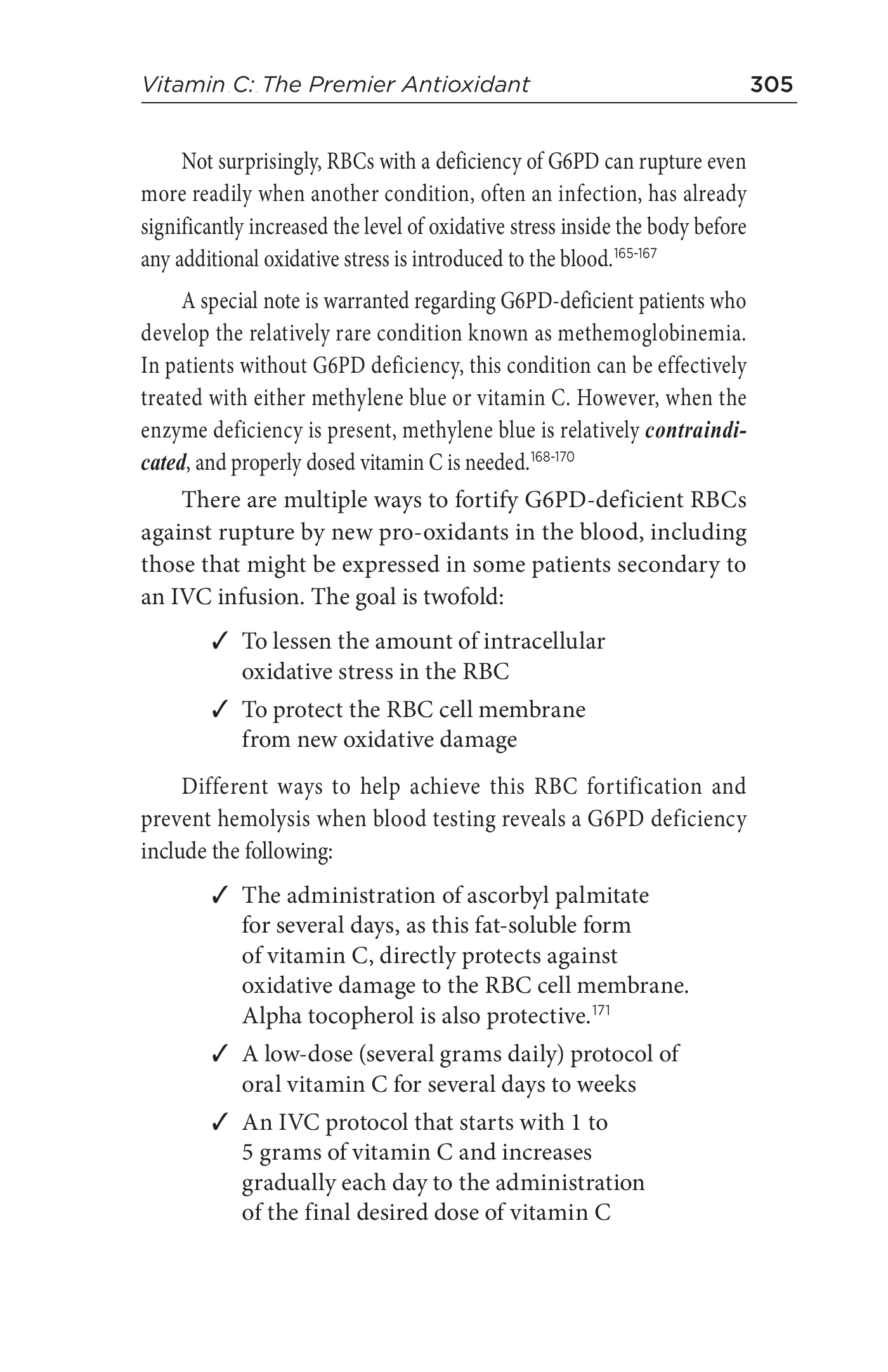
Not surprisingly, RBCs with a deficiency of G6PD can rupture even more readily when another condition, often an infection, has already significantly increased the level of oxidative stress inside the body before any additional oxidative stress is introduced to the blood. 165-167 A special note is warranted regarding G6PD-deficient patients who develop the relatively rare condition known as methemoglobinemia. In patients without G6PD deficiency, this condition can be effectively treated with either methylene blue or vitamin C. However, when the enzyme deficiency is present, methylene blue is relatively contraindi- cated, and properly dosed vitamin C is needed. 168-170 There are multiple ways to fortify G6PD-deficient RBCs against rupture by new pro-oxidants in the blood, including those that might be expressed in some patients secondary to an IVC infusion. The goal is twofold: ✓ To lessen the amount of intracellular oxidative stress in the RBC ✓ To protect the RBC cell membrane from new oxidative damage Different ways to help achieve this RBC fortification and prevent hemolysis when blood testing reveals a G6PD deficiency include the following: ✓ The administration of ascorbyl palmitate for several days, as this fat-soluble form of vitamin C, directly protects against oxidative damage to the RBC cell membrane. Alpha tocopherol is also protective. 171 ✓ A low-dose (several grams daily) protocol of oral vitamin C for several days to weeks ✓ An IVC protocol that starts with 1 to 5 grams of vitamin C and increases gradually each day to the administration of the final desired dose of vitamin C

Source page 306

Open original page 306 — full-size image

306 THE ONLY CAUSE OF DISEASE

✓ The administration of other antioxidants, such as quercetin 172-173 A protocol for dealing with hemolysis that has already begun: ✓ The patient should report immediately if the urine becomes even slightly darker than usual during the infusion. As VC has a diuretic effect, the urine should always be the same color or even lighter in tone. Damage to the kidneys only occurs when the hemolysis remains undetected and the aggravating factors are continued. ✓ Stop the infusion and then reinitiate VC according to the principles of the Mop-Up protocol described above. ✓ Additional VC should be given in normal saline or lactated Ringer’s solution to maximize volume expansion in the blood and increase the volume of urine flow. ✓ Administer 20 to 40 mg of furosemide IV if available, or orally, to further increase urine flow. Currently, blood donors are not routinely screened for G6PD deficiency. While giving G6PD blood would not be expected to routinely cause any problems in the recipient, patients with condi- tions resulting in increased systemic oxidative stress would be best managed like those receiving IVC. 174-175

Vitamin C and Immunosuppressive Drugs Because vitamin C has been recognized as an agent that strengthens the immune system, vitamin C is needlessly underdosed or entirely avoided in patients taking immunosuppressive drugs for several conditions and diseases, including patients who have received organ transplants or bone marrow stem cell transplants. The rationale is that the immune system is attacking the transplant,

Source page 307

Open original page 307 — full-size image

Vitamin Introduction C: The Premier Antioxidant 307

and the “stronger” the immune system is, the more effective the rejection will be. The problem with this reasoning is that transplant rejection is like all other pathologies, meaning that it is secondary to increased oxidative ...the primary benefit stress at the site of the transplant. 176 of prescription Synthetic corticosteroids, like predni- steroids is that they sone, are included in most immunosup- reduce oxidative pressive regimens. As will be discussed at stress (inflammation) length elsewhere, the primary benefit of by facilitating the prescription steroids is that they reduce uptake of vitamin C oxidative stress (inflammation) by facil- into the cells itating the uptake of vitamin C into the most affected. cells most affected. The effectiveness of steroids in the long term for transplant patients depends on the amount of vitamin C being taken and the availability of vitamin C to be transported into the cells. When extracellular vitamin C levels remain low, the steroids provide only undesirable side effects and little to no benefit. Most prominently, due to the gluconeogenesis that they stimulate, glucose levels rise, and muscle wasting increases along with the formation of new glucose. Furthermore, the array of other immunosuppressive drugs used in transplant patients is gener- ally pro-oxidant in nature, which also works to keep vitamin C levels depleted where they are needed most. It has never been shown that vitamin C stimulates or promotes the rejection of transplants—quite the opposite. IVC, later followed by a regimen of oral vitamin C, has been shown to improve overall survival in patients receiving bone marrow transplants. 177 In animal studies, vitamin C, along with vitamin E, has been shown to prolong heart transplant survival. 178-179 A vitamin E antioxidant derivative has also been shown to decrease heart transplant rejection and increase

Source page 308

Open original page 308 — full-size image

308 THE ONLY CAUSE OF DISEASE

survival times. 180 Vitamin C has also been shown to improve the defense provided by white blood cells in kidney transplant patients. 181 In heart transplant patients, accelerated coronary arterioscle- rosis is a leading cause of death. 182-183 In human and animal studies, vitamins C and E have been shown to slow the development of this arteriosclerosis and increase survival times. 184-187 It appears, then, that vitamin C is never contraindicated in organ or stem cell transplants. Rather, vitamin C is indicated for condi- tions with established increased oxidative stress, which can cause the disease or pathology. While optimal doses have not been established, vitamin C dosing in transplant patients is just as appropriate as for any other condition.

Recap After the discovery of vitamin C by Dr. Albert Szent-Gyorgyi, Dr. Frederick Klenner led the way in demonstrating its extraordi- nary clinical power in resolving infections and neutralizing toxins. A handful of prominent scientists and clinicians have continued to lead the way in using and promoting vitamin C, following Dr. Klenner’s introduction of it to the medical world. A sampling of the extensive research documenting the benefits of vitamin C in treating patients is provided. A practical section on administering vitamin C properly is also provided. The exceptional safety of vitamin C is well-documented in the literature. Myths asserting that vitamin C causes kidney stones and renal toxicity are debunked. G6PD deficiency and the potential of RBC breakdown with IVC are addressed in detail as a factor in selected individuals, as well as ways to readily overcome it or to deal with it as it occurs. The myth that vitamin C might be harmful to patients with organ or bone marrow transplants is also dispelled.


Book introduction and complete contents · Previous section · Next section · Previous part