Remembering Watson
Highlights
-
Watson lived to 17 years old, likely outliving roughly 90–95% of dachshunds.
-
He was mischievous and fearless. Years ago, he jumped from a bed and injured his spine, leaving his hind legs paralyzed. He lived with paraplegia for approximately 5–6 years.
-
About four years ago, he developed high blood calcium, elevated PTH, urinary calcium crystals/possible renal stones, and an abdominal lesion suspicious for cancer.
-
At that point, we changed his diet dramatically: we removed essentially all commercial processed dog food and moved him toward a carnivore/ketogenic, meat-based diet. Dogs evolved as meat-adapted animals, and this raised a simple question for me: why should a dog’s diet be dominated by refined carbohydrates and highly processed foods?
-
We also used orthomolecular nutritional support, including vitamin C and other nutrients, while monitoring his calcium, vitamin D, magnesium, kidney function, and overall condition.
-
Despite paraplegia and later serious metabolic and oncologic concerns, Watson remained with us until age 17.
-
A single case cannot prove causation, but his unusually long survival—outliving most of his peers despite substantial health challenges—is at least consistent with the possibility that supporting nutrition, metabolism, and whole-body resilience helped him maintain function and quality of life.
Watson came into our family as a little dachshund, but over seventeen years he became something much larger: a companion, a witness to our family’s life, and, especially for Eric, a faithful friend through childhood and adulthood.
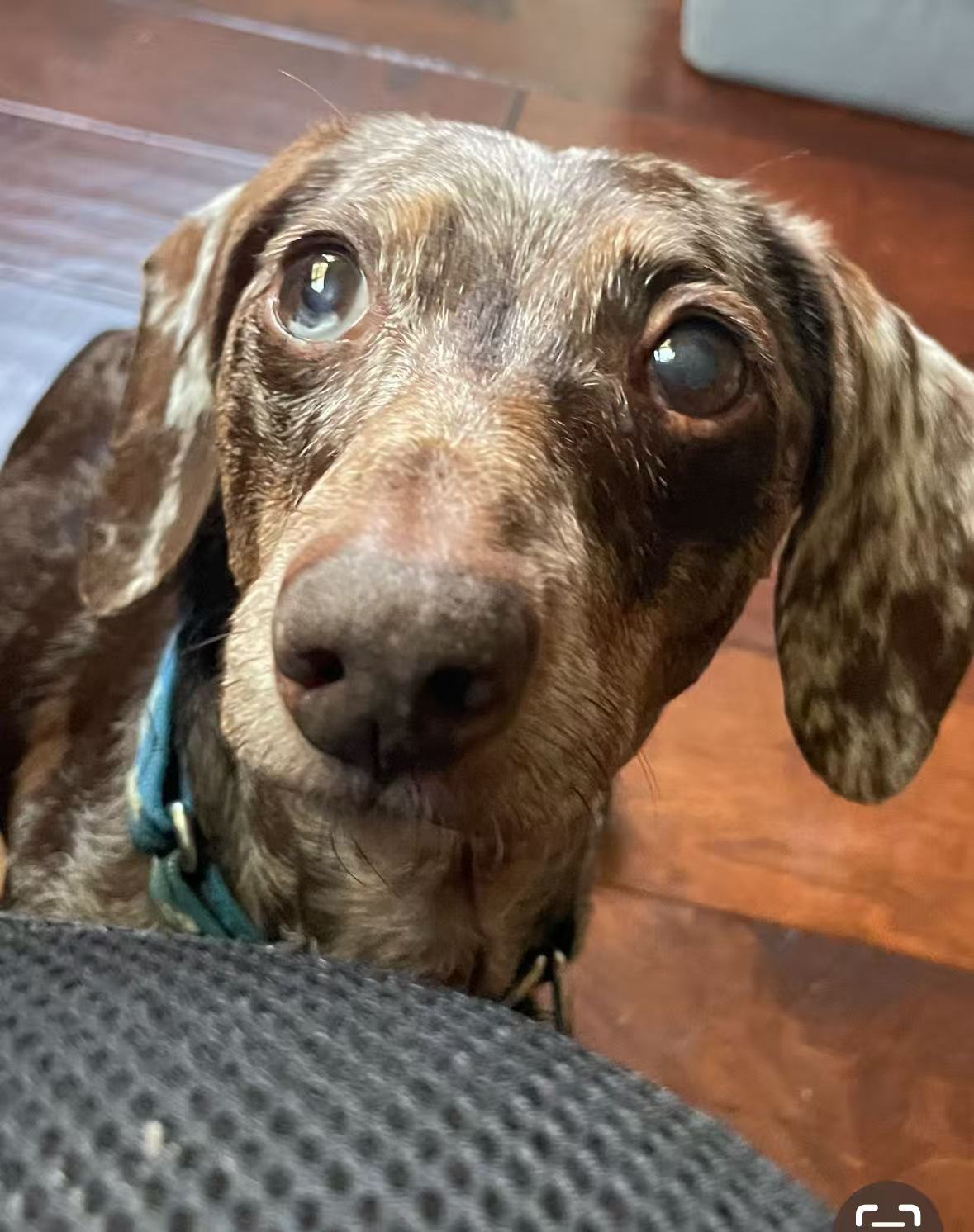
About four years ago, when Watson was around thirteen, we thought we might lose him.
His blood calcium was high, his parathyroid hormone was abnormally elevated, and crystals appeared in his urine, raising concern for kidney stones. Imaging also found an abdominal lesion that looked suspicious for cancer. With hypercalcemia, possible renal disease, and a possible tumor appearing at the same time, malignancy entered the differential diagnosis.
Eric was devastated. Watson had already been his companion for many years.
But Watson had already overcome a major challenge before that.
He was always mischievous and adventurous. At one point, he jumped from a bed and suffered a severe spinal injury. His hind legs became paralyzed, and for roughly five to six years he lived as a paraplegic dog.
Yet he adapted.
He kept going.
When the hypercalcemia and possible cancer appeared, I decided to do what I knew how to do. We removed the commercial dry and canned dog foods and shifted him toward a carnivore, ketogenic, meat-based diet with far less processed food and carbohydrate.
I kept thinking about a basic biological question:
Dogs are fundamentally meat-adapted animals. Since when did dogs need a diet dominated by refined carbohydrates and highly processed food?
We also added orthomolecular nutritional support, including vitamin C and other nutrients, while paying close attention to calcium, vitamin D, magnesium, kidney health, activity, and overall condition.
Within days, we could see that Watson had more energy.
He became more alert and more like himself again.
No one could know then how much longer he would live, and one animal’s experience cannot establish that any single dietary or nutritional intervention caused his longevity. But what happened afterward was meaningful to us.
Watson stayed.
Another year passed, then another, and another.
Despite years of hind-leg paralysis, suspected cancer, hypercalcemia, possible renal stones, and advanced age, Watson lived until seventeen.
That placed him among the longest-lived dachshunds.
His life does not prove that our approach was “the answer.” But his longevity—especially in the face of so many health challenges—makes me believe that what we did was at least directionally right: reduce metabolic burden, eliminate unnecessary processed food, provide species-appropriate nutrition, support nutritional sufficiency, maintain movement and engagement where possible, and care for the whole organism rather than focusing only on a diagnosis.
Watson’s life reminds me that medicine is not only about laboratory values, scans, prognoses, or disease labels.
Sometimes it is about helping a living being preserve as much energy, resilience, function, and quality of life as possible.
And Watson kept going.
For seventeen years, he walked beside our family.
For the last several of those years, even when his hind legs could no longer carry him, his spirit still did.
Now his little footsteps are gone, but the place he occupied in our lives is not.
Watson, 2009–2026.
Seventeen years of loyalty, resilience, mischief, companionship, and love.
A very small dog who left a very large space behind.